
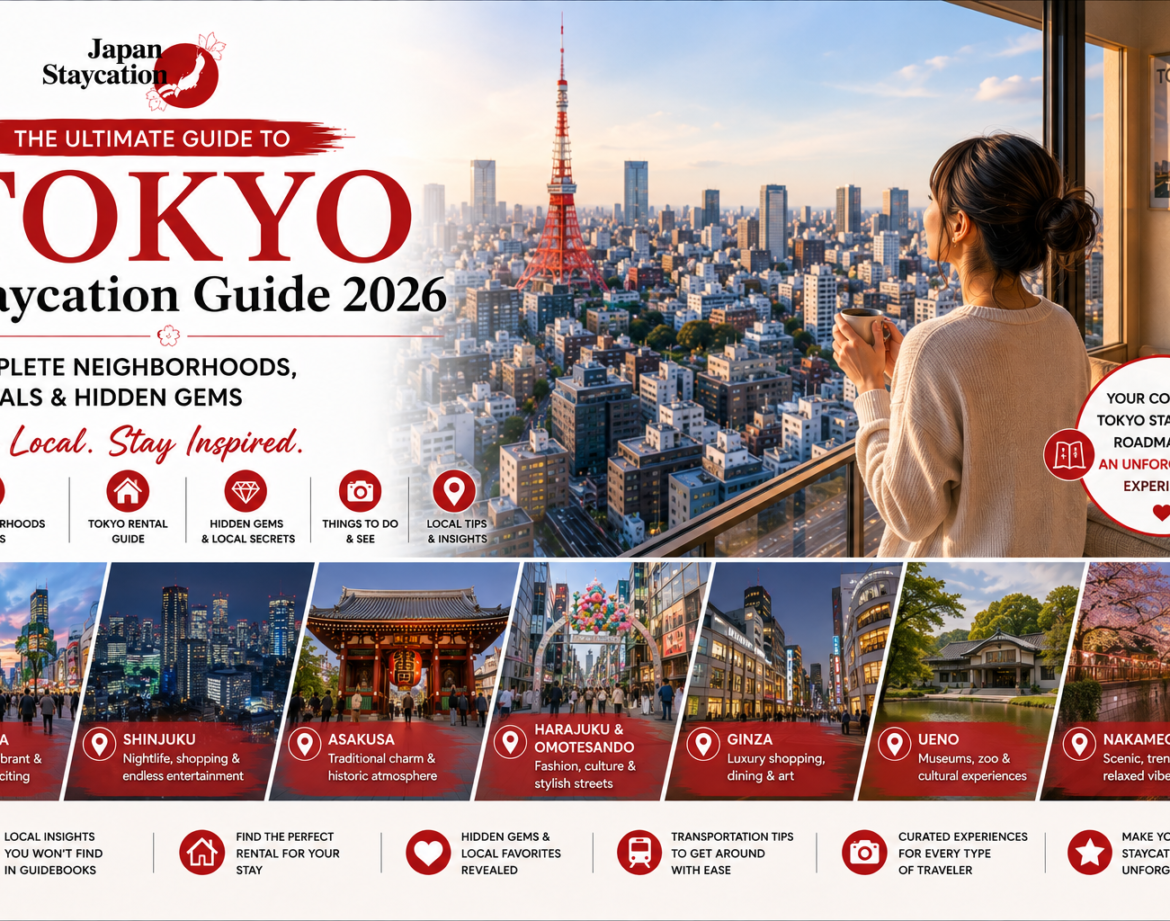
The Complete Tokyo Staycation Guide 2026: Best Neighborhoods, Rentals & Hidden Gems
Planning a Tokyo staycation in 2026? Whether you are a first-time visitor or a seasoned traveler, choosing the right neighborhood and accommodation can make or break your Tokyo experience. This ultimate Tokyo staycation guide covers everything you need to know — from the best areas to stay, budget breakdowns, and where to find hidden gems that most tourists miss.
What Is a Tokyo Staycation?
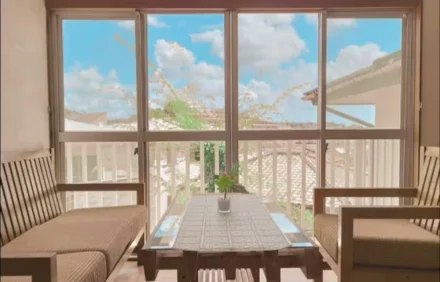
A Tokyo staycation means experiencing Japan’s capital like a local — staying in apartments, vacation rentals, or ryokans instead of hotels. Unlike typical sightseeing trips, a staycation immerses you in neighborhood culture, local cuisine, and daily Tokyo life. You shop at neighborhood grocery stores, eat at local ramen shops, and wake up to city views from your rental balcony.
Best Neighborhoods for a Tokyo Staycation
Tokyo is a city of neighborhoods, each with its own personality. Here is where to stay based on your travel style:
Asakusa — Traditional Tokyo Living
If you want to wake up near Senso-ji Temple and stroll through historic streets, Asakusa is your neighborhood. This area offers traditional ryokans, budget-friendly rentals, and some of Tokyo’s most photogenic spots. Read our complete Asakusa Staycation Guide for detailed recommendations on temples, ryokans, and local secrets.
Shibuya — Youth Culture & Trendy Apartments
Shibuya is Tokyo’s trendsetting district, famous for its crossing, fashion boutiques, and vibrant nightlife. Beyond the crowds, Shibuya hides quiet residential streets with stylish apartments perfect for longer stays. Our Shibuya Apartment Rental Guide and Hidden Gems Shibuya reveal the best spots locals love.
Shinjuku — Convenience & Accommodation Variety
Shinjuku offers the widest range of accommodations in Tokyo, from capsule hotels to serviced apartments. With direct train access to Mount Fuji and major attractions, it is a practical base for first-time visitors. See our Shinjuku Accommodation Guide for a full comparison of hotels versus vacation rentals.
Ginza — Luxury Staycation Experience
For travelers seeking refined elegance, Ginza delivers world-class shopping, Michelin-starred restaurants, and premium apartment rentals. Our Ginza Staycation Guide covers luxury apartments, fine dining, and art galleries in Tokyo’s most sophisticated district.
Ueno — Culture, Museums & Nature
Ueno is Tokyo’s cultural capital, home to the National Museum, Ueno Zoo, and beautiful parklands. It is ideal for families and culture enthusiasts looking for a relaxed staycation with excellent train connections. Check our Ueno Staycation Guide for museum tips and local food recommendations.
Harajuku & Omotesando — Fashion & Creative Energy
Harajuku is Tokyo’s fashion playground, while neighboring Omotesando offers upscale boutiques and architecturally stunning buildings. This area is perfect for creative travelers who want to stay in trendy rentals surrounded by Tokyo’s most stylish districts. Read our Harajuku & Omotesando Staycation Guide for fashion spots, cafes, and apartment recommendations.
Akihabara — Anime, Electronics & Unique Stays
Akihabara is a paradise for anime fans, gamers, and tech enthusiasts. Beyond the neon lights, the area offers surprisingly affordable apartments and a unique Tokyo experience you will not find elsewhere. Our Akihabara Staycation Guide reveals the best anime spots, electronics shopping, and themed accommodations.
Tokyo Staycation Budget Breakdown (2026)
How much should you budget for a Tokyo staycation? Costs vary dramatically depending on your travel style:
| Expense Category | Budget Staycation | Mid-Range Staycation | Luxury Staycation |
|---|---|---|---|
| Accommodation (per night) | $50–$80 | $100–$200 | $250+ |
| Food (per day) | $30–$50 | $60–$100 | $150+ |
| Transportation (weekly) | $25 | $40 | $60+ |
| Activities (weekly) | $50 | $100 | $300+ |
| Total (1 week) | $700–$1,000 | $1,500–$2,500 | $4,000+ |
For a complete cost breakdown including hidden fees and money-saving tips, see our 1-Week Tokyo Staycation Cost Guide.
Luxury vs Budget: Which Tokyo Staycation Is Right for You?
Tokyo accommodates every budget, but your choice of neighborhood and accommodation type shapes your experience:
Budget Staycation ($700–$1,000/week):
– Stay in smaller apartments in Ueno, Asakusa, or residential Shibuya
– Eat at local ramen shops, convenience stores, and food halls
– Use Tokyo Metro day passes for transportation
Mid-Range Staycation ($1,500–$2,500/week):
– Rent modern apartments in Shinjuku, Harajuku, or central Tokyo
– Mix of local restaurants and mid-tier dining
– Occasional taxi rides alongside public transport
Luxury Staycation ($4,000+/week):
– Premium apartments in Ginza, Roppongi, or upscale Shibuya
– Michelin-starred dining and private tours
– Private car with driver for day trips
Our Luxury vs Budget Tokyo Rentals Guide helps you decide which option matches your priorities.
Types of Tokyo Staycation Accommodations
Vacation Rentals & Apartments
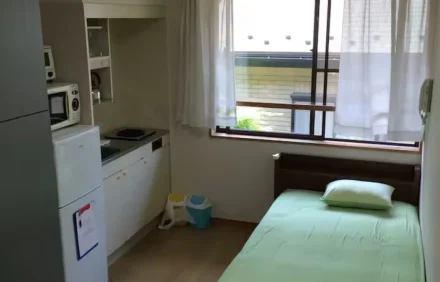
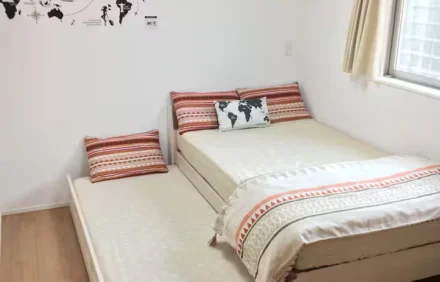
Private apartments offer space, flexibility, and a local living experience. Most include kitchenettes, washing machines, and WiFi — essential for stays longer than a few days. Learn how to find legitimate rentals in our How to Rent an Apartment in Tokyo Guide.
Ryokans & Traditional Stays
For a uniquely Japanese experience, ryokans provide tatami rooms, futon bedding, and often include breakfast. Asakusa and Ueno have excellent ryokan options at various price points.
Extended-Stay Hotels
Hotels like Tokyu Stay offer apartment-style rooms with kitchenettes and laundry facilities, bridging the gap between hotels and rentals. Read our Tokyu Stay Shibuya Ebisu Review for a detailed look at extended-stay hotel living.
Hidden Gems for an Unforgettable Tokyo Staycation
Beyond the famous attractions, Tokyo rewards curious travelers with unforgettable discoveries:
- Shibuya backstreets: Quiet coffee shops and independent boutiques hiding minutes from the famous crossing (Hidden Gems Shibuya)
- Ueno backstreets: Traditional food markets and local izakayas untouched by tourism
- Ginza alleys: Small art galleries and exclusive sake bars behind the main avenues
- Asakusa mornings: Visit Senso-ji at 6 AM before the crowds arrive
Seasonal Tokyo Staycation Guide
Spring (March–May): Cherry blossoms transform every neighborhood. Ueno Park and Asakusa are particularly stunning. Book accommodations 3+ months in advance.
Summer (June–August): Hot and humid, but festivals energize the city. Stay near Shibuya or Shinjuku for easy access to summer events.
Autumn (September–November): Comfortable temperatures and fall foliage make this the best season for walking neighborhoods. Harajuku’s Meiji Jingu Gaien is spectacular.
Winter (December–February): Cold but dry, with illuminations and New Year celebrations. Ginza and Shinjuku sparkle with light displays. Great for budget travelers as prices drop.
Practical Tips for a Smooth Tokyo Staycation
Avoid Common Booking Mistakes
Many first-time renters make costly errors — from booking apartments far from train stations to misunderstanding Japan’s garbage sorting rules. Our Tokyo Rental Mistakes Guide covers the 10 most common pitfalls and how to avoid them.
Transportation Tips
- Get a Suica or Pasmo IC card for seamless train and bus travel
- Download Google Maps and Hyperdia apps
- Stay within 10 minutes walk of a major station (Yamanote Line stations are ideal)
Essential Packing
- Portable WiFi or eSIM (essential for navigation)
- Comfortable walking shoes (you will walk 15,000+ steps daily)
- Universal adapter (Japan uses Type A plugs)
Money Matters
- Japan is still largely cash-based; carry yen even in Tokyo
- Many small restaurants do not accept credit cards
- 7-Eleven ATMs accept international cards
Expanding Beyond Tokyo: Kyoto Staycation
If your staycation extends beyond Tokyo, Kyoto offers a completely different experience — traditional temples, bamboo groves, and historic geisha districts. Our Kyoto Renting Guide covers everything from traditional machiya houses to modern apartments in Japan’s cultural capital.
Frequently Asked Questions
What is the best neighborhood for a first-time Tokyo staycation?
Shinjuku or Shibuya offer the best balance of convenience, dining, and transportation access. Both have plenty of apartment rentals and direct train connections to major attractions.
How far in advance should I book a Tokyo apartment?
For peak seasons (spring cherry blossom, autumn foliage, New Year), book 3–4 months ahead. For off-season travel, 4–6 weeks is usually sufficient.
Is Tokyo safe for solo travelers?
Tokyo is one of the safest cities in the world. Solo travelers, including women, generally feel safe walking at night in most neighborhoods.
Do I need to speak Japanese for a staycation?
No. Tokyo is foreigner-friendly with English signage in stations and tourist areas. Learning basic phrases like “arigatou gozaimasu” (thank you) and “sumimasen” (excuse me) goes a long way.
Can foreigners rent apartments in Tokyo short-term?
Yes, but there are specific requirements and processes. Our Complete Guide to Renting an Apartment in Tokyo explains documentation, deposits, and agency tips step-by-step.
Conclusion: Plan Your Ultimate Tokyo Staycation
Tokyo rewards travelers who stay longer and live like locals. From the traditional streets of Asakusa to the fashion-forward alleys of Harajuku, each neighborhood offers a distinct Tokyo experience. Choose your base wisely, budget realistically, and leave room for spontaneous discoveries — that is when Tokyo truly shines.
Start planning with our neighborhood-specific staycation guides, and transform your Tokyo trip from a typical vacation into an unforgettable local experience.
Pingback: Apartment for Rent in Ikebukuro Tokyo 2026: Complete Guide for Foreigners – japanstaycation.com
Pingback: Best Things to Do in Tokyo 2026: A Complete Visitor’s Guide – japanstaycation.com