
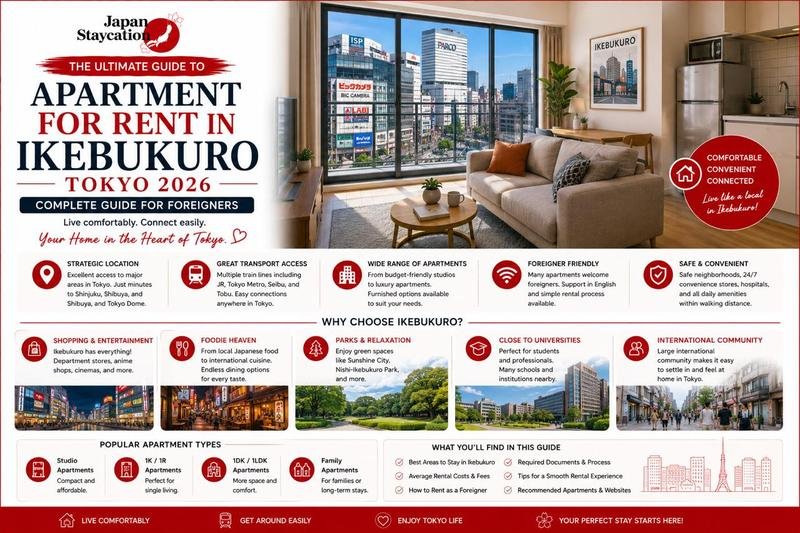
Apartment for Rent in Ikebukuro Tokyo 2026: Complete Guide for Foreigners
Looking for an apartment for rent in Ikebukuro Tokyo? Ikebukuro is one of Tokyo’s most underrated neighborhoods — a major transport hub, a thriving commercial district, and surprisingly affordable compared to nearby Shinjuku or Shibuya. In 2026, renting an apartment in Ikebukuro as a foreigner gives you unbeatable connectivity, diverse entertainment, and budget-friendly housing options. This complete guide covers everything from finding listings, understanding costs, to signing your lease.
Why Rent an Apartment in Ikebukuro?
Ikebukuro is often overshadowed by Shinjuku and Shibuya, but savvy renters know it offers some of the best value in central Tokyo. Here is why renting an apartment in Ikebukuro makes sense:
- Transport Hub: Ikebukuro Station is the second-busiest in the world, connecting JR Yamanote Line, Saikyo Line, Shonan-Shinjuku Line, and three metro lines — direct access to Shinjuku (5 min), Shibuya (10 min), and Ueno (10 min)
- Affordable Rent: Apartments here cost 15–25% less than Shinjuku for the same size, making it a favorite among students and young professionals
- Otaku Culture: Anime and manga enthusiasts love Ikebukuro’s Otome Road, Pokemon Center, and Animate flagship store
- Family Friendly: Sunshine City aquarium, planetarium, and shopping mall make it ideal for families with children
- Dining: Hundreds of restaurants from budget ramen to upscale izakayas, plus the famous Ikebukuro Chinatown (with excellent dim sum)
- Green Spaces: Mejirodai Park and the nearby campus of Rikkyo University provide green escapes
Types of Apartments for Rent in Ikebukuro
1R (One Room) Apartments
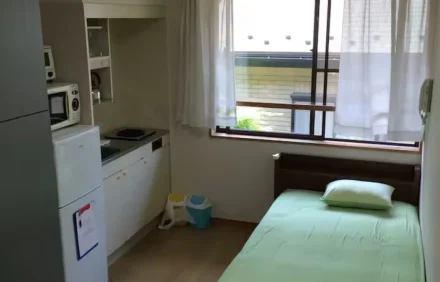
The most common type for singles. Typically 15–25 square meters with a combined living, kitchen, and sleeping area. Perfect for students, young professionals, or solo digital nomads. Monthly rent ranges from ¥70,000 to ¥120,000 — significantly cheaper than Shinjuku.
1K / 1DK Apartments
Slightly larger (25–35 sqm) with a separate kitchen area. 1DK includes a dining space. Ideal for couples or those who want a bit more room. Rent: ¥110,000–¥160,000 per month. Many newer buildings near the station offer modern 1K units with compact but efficient layouts.
2K / 2DK Apartments
Two-room apartments (35–50 sqm) suitable for small families or shared living. Ikebukuro has more family-sized options than trendy Shibuya. Rent: ¥150,000–¥220,000 per month.
Share Houses (Guest House)
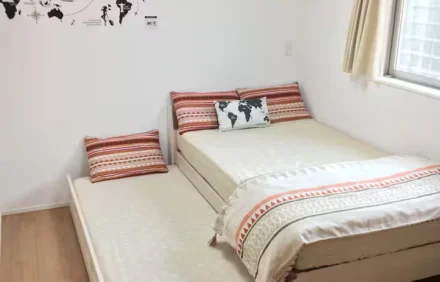
Popular among foreigners and students. Private bedrooms with shared kitchen, bathroom, and living areas. Rent starts from ¥40,000/month. No guarantor or key money required. Great for building a social network when first arriving in Tokyo.
Best Areas Within Ikebukuro for Renting
Nishi-Ikebukuro (West)
The area immediately west of Ikebukuro Station. High-rise apartment buildings dominate here, many built in the 2010s with modern facilities. Expect higher rents but the newest amenities — gyms, auto-lock systems, and package delivery boxes.
Higashi-Ikebukuro (East)
Slightly more residential and budget-friendly. Older buildings but larger rooms for the price. A 5-minute walk to the station. Popular with long-term residents and families.
Mejiro / Zoshigaya (Southwest)
Quieter residential neighborhoods with tree-lined streets and small parks. A 10–15 minute walk from Ikebukuro Station. Mejiro is especially popular with academics due to Gakushuin University.
Otsuka / Itabashi (North)
Even more affordable, just north of Ikebukuro on the Yamanote Line. Easy access via one train stop. Many students choose Otsuka to save ¥20,000–¥30,000 per month on rent.
Average Rent Prices in Ikebukuro 2026
| Apartment Type | Size | Average Monthly Rent |
|---|---|---|
| 1R (Studio) | 15–25 sqm | ¥70,000 – ¥120,000 |
| 1K / 1DK | 25–35 sqm | ¥110,000 – ¥160,000 |
| 2K / 2DK | 35–50 sqm | ¥150,000 – ¥220,000 |
| Share House Room | 6–12 sqm | ¥40,000 – ¥70,000 |
Note: Ikebukuro rent is typically 15–25% cheaper than Shinjuku and 20–30% cheaper than Shibuya. Utilities average ¥12,000–¥18,000/month.
How to Find Apartments for Rent in Ikebukuro
Online Platforms
- Suumo: Japan’s largest real estate portal. Filter by Ikebukuro area and foreigner-friendly listings
- GaijinPot Apartments: English-language listings with simplified requirements for foreigners
- Sakura House: Short-term furnished apartments near Ikebukuro Station — no guarantor needed
- Oakhouse: Share houses and private apartments with English support, popular with young professionals
Real Estate Agencies Near Ikebukuro Station
The west exit of Ikebukuro Station has dozens of agencies. Look for signs reading gaikokujin ok or foreigner OK. Recommended English-speaking agencies include Mini Mini and Apamanshop, both with branches near the station.
Rental Process for Foreigners
- Prepare Documents: Passport, residence card (zairyu card), proof of income (ideally 4x annual rent), Japanese bank account, emergency contact (often your employer or school)
- Find a Guarantor: Many landlords require a Japanese guarantor. If unavailable, use a guarantor company (hoshonin gaisha) for a one-time fee of 0.5–1 month rent. Share houses typically skip this step.
- Submit Application: Fill out the application form. Approval typically takes 3–7 business days. Student-friendly agencies may approve faster.
- Sign Contract: Lease is usually 2 years. Read carefully — early termination fees and renewal fees apply.
- Pay Initial Costs: See cost breakdown below
- Move In: Receive keys, complete property inspection, and activate utilities (electricity, gas, water, internet)
Costs Beyond Monthly Rent
| Cost | Amount | Notes |
|---|---|---|
| Deposit (Shikikin) | 1–2 months rent | Refundable minus repair costs |
| Key Money (Reikin) | 0–1 months rent | Non-refundable gift to landlord (less common in 2026) |
| Agency Fee | 0.5–1 months rent + tax | One-time |
| Guarantor Fee | 0.5–1 months rent | One-time if using guarantor company |
| Fire Insurance | ¥15,000–¥25,000 | Required, typically 2 years |
| Key Exchange Fee | ¥10,000–¥20,000 | Lock replacement |
| Initial Total | 4–6 months rent | Budget ¥450,000–¥750,000 for a ¥110,000 apartment |
Pros and Cons of Living in Ikebukuro
Pros
- Unbeatable Connectivity: Second-busiest station in the world — trains to almost anywhere in Tokyo in under 30 minutes
- Value for Money: Lower rent than Shinjuku or Shibuya for the same room size and building age
- Entertainment: Sunshine City, aquarium, planetarium, theaters, and otaku culture
- Food: Unbeatable variety — ramen streets, Chinatown dim sum, Korean BBQ, and more
- Family-Friendly: More parks, kid-friendly attractions, and family housing than central nightlife districts
Cons
- Crowded Station: Ikebukuro Station during rush hour is overwhelming — expect packed platforms
- Tourist Traffic: Otome Road and Pokemon Center attract crowds, especially on weekends
- Noise: Areas near the station and major roads can be noisy late into the night
- Less Glamorous: Not as trendy or upscale as Shibuya, Roppongi, or Ginza — more functional than fashionable
- Safety Note: While generally safe, some backstreets near the station have a reputation for nightlife-related incidents — stick to main streets at night
FAQ
Can foreigners rent apartments in Ikebukuro?
Yes, absolutely. Ikebukuro is one of the most foreigner-friendly neighborhoods in Tokyo. Many agencies, share houses, and landlords specifically cater to international residents. You need a residence card, proof of income, and a Japanese bank account.
Is Ikebukuro cheaper than Shinjuku for rent?
Yes. Ikebukuro rent is typically 15–25% cheaper than Shinjuku for comparable apartment types. A 1R in Ikebukuro averages ¥90,000 vs ¥115,000+ in Shinjuku.
How long does it take to commute from Ikebukuro to Shibuya?
Direct via JR Yamanote Line: approximately 10 minutes. To Shinjuku: 5 minutes. To Tokyo Station: 15 minutes.
What is the best time to search for apartments in Ikebukuro?
January–March is peak moving season. Start searching 1–2 months before your desired move-in date. Off-peak months (June–August) sometimes offer move-in promotions or discounted key money.
Are share houses a good option in Ikebukuro?
Yes, share houses are extremely popular in Ikebukuro. They offer private bedrooms with shared facilities, no guarantor requirement, flexible lease terms, and built-in social networks. Oakhouse and Sakura House both have multiple properties in the area. Prices range from ¥40,000–¥70,000/month.
Conclusion
Finding an apartment for rent in Ikebukuro Tokyo in 2026 is a smart choice for foreigners who want central Tokyo living without the premium price tag. From compact 1R studios with direct Yamanote Line access to spacious family apartments near Sunshine City, Ikebukuro offers something for every budget and lifestyle.
Whether you are a student at nearby universities, a young professional working in Shinjuku, or a family seeking convenience and entertainment, Ikebukuro delivers an unbeatable combination of connectivity, affordability, and character. Start your apartment search today and discover why this underrated neighborhood is becoming Tokyo’s best-kept rental secret.
Explore more Tokyo neighborhoods with our guides to Shibuya apartments, Asakusa staycation, and our complete Tokyo staycation guide.
Pingback: Apartment for Rent in Shibuya Tokyo 2026: Complete Guide for Foreigners – japanstaycation.com
Pingback: Ikebukuro vs Shibuya vs Asakusa: Where to Rent in Tokyo 2026 – japanstaycation.com