Best Things to Do in Japan in Autumn 2026: Fall Foliage, Food & Hidden Spots
Best Things to Do in Japan in Autumn 2026: Fall Foliage, Food & Hidden Spots
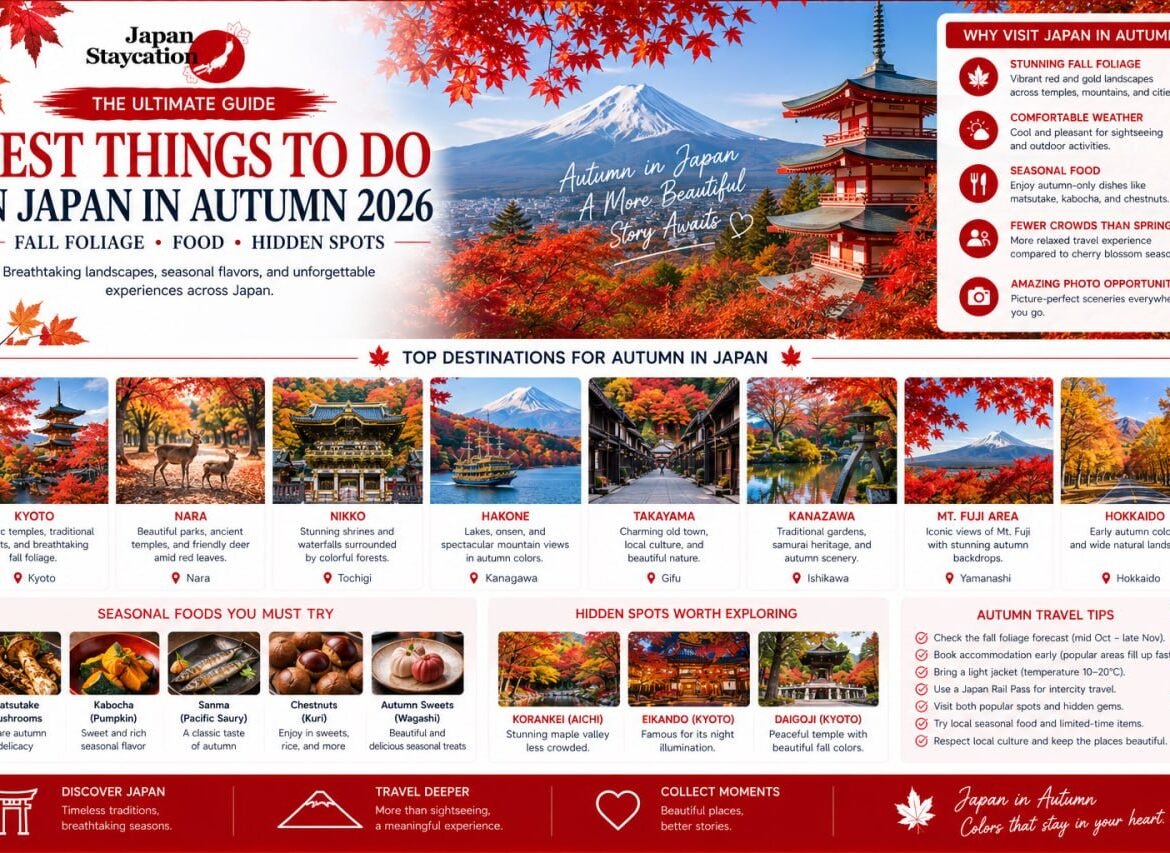
Autumn in Japan is not merely a season. It is a nationwide event. From late September through early December, the archipelago transforms into a canvas of crimson, gold, and amber as the koyo (fall foliage) sweeps southward from Hokkaido to Kyushu. For a 2026 staycation, autumn offers arguably the most comfortable weather, the most photogenic scenery, and the most rewarding culinary season of the year.
This guide covers the best autumn destinations, seasonal activities, where to stay, and practical tips to help you plan a Japan staycation during the most beautiful season.
Why Autumn Is the Best Season for a Japan Staycation
Perfect Weather: September and October bring crisp, dry air with daytime temperatures between 15 and 22 degrees Celsius. You can walk all day without the oppressive humidity of summer or the chill of winter.
Dramatic Scenery: Japanese maple (momiji) and ginkgo trees turn vivid red and yellow against evergreen forests and traditional temple architecture. No other season offers such saturated color.
Seasonal Cuisine: Autumn is harvest season. Matsutake mushrooms, Pacific saury (sanma), sweet potatoes, chestnuts, and freshly harvested rice dominate restaurant menus. It is the best time of year to eat in Japan.
Lower Crowds Than Spring: While cherry blossom season draws overwhelming crowds, autumn foliage spreads over a longer window and across more regions, distributing visitors more evenly.
Top Autumn Destinations for Fall Foliage
Kyoto: The Classic Autumn Experience
Kyoto is the undisputed capital of autumn color. The combination of ancient wooden temples, stone gardens, and hillside maple forests creates an atmosphere that feels almost unreal.
Kiyomizu-dera: The famous wooden stage overlooks a valley of maple trees that ignite in crimson from mid-November. Arrive at opening time to avoid the densest crowds.
Arashiyama: The bamboo grove is iconic year-round, but the surrounding Tenryu-ji temple garden and the mountainside maple corridor are at their peak in late November.
Tofuku-ji: The Tsutenkyo Bridge crosses a valley of maple trees so dense that the view from above looks like a river of fire. This is Kyoto’s most dramatic autumn sight.
Staycation tip: Book a vacation rental in the Higashiyama or Arashiyama districts. A traditional townhouse (machiya) with a small garden lets you enjoy autumn colors in complete privacy.
Tokyo: Urban Autumn Done Right
Tokyo does not have Kyoto’s temple density, but its autumn spots are more accessible and far less crowded.
Meiji Jingu Gaien: The ginkgo avenue runs for 300 meters with 146 trees turning uniform gold. It is Tokyo’s most photographed autumn spot and best visited in late November.
Rikugien Garden: This Edo-period landscape garden features a central pond surrounded by maple hills. The night illumination in late November and early December is one of Tokyo’s most atmospheric experiences.
Showa Kinen Park: The ginkgo and maple groves here are vast enough that you can find solitude even on weekends. The Japanese garden section is particularly photogenic.
Staycation tip: Rent an apartment in Shinjuku or Shibuya for easy train access to all Tokyo foliage spots, plus quick day-trip access to Nikko and Hakone.
Nikko: Mountain Autumn at Its Peak
Two hours north of Tokyo, Nikko sits at higher elevation, meaning its colors arrive earlier (early to mid-October) and with greater intensity.
Lake Chuzenji: The surrounding mountains reflect in the lake, creating mirror images of entire hillsides in red and gold. The Irohazaka winding road is Japan’s most famous autumn drive.
Toshogu Shrine: The UNESCO-listed shrine complex is beautiful year-round, but the approach lined with ancient cedar trees gains depth when underplanted with red maples.
Hakone: Hot Springs and Fall Colors
Hakone combines three autumn essentials: volcanic lakes, hot spring baths, and forested hillsides.
Lake Ashi: Take the sightseeing cruise with Mt Fuji visible behind autumn foliage on the far shore. On clear mornings, this is one of Japan’s most iconic views.
Hakone Open-Air Museum: Sculpture gardens surrounded by maple trees, plus a natural hot spring foot bath to warm your feet while you admire the colors.
Staycation tip: A private villa with an outdoor onsen (rotenburo) surrounded by autumn forest is the ultimate Hakone autumn experience.
Tohoku and Hokkaido: Early Color, Empty Trails
If you are visiting in September or early October, head north.
Hokkaido: Daisetsuzan National Park sees its first snow and final autumn colors simultaneously in late September. The contrast of white peaks and red valleys is unique.
Aomori (Lake Towada and Oirase Gorge): The gorge trail follows a river through a tunnel of maple trees. Mid-October is peak, and the trails are far less crowded than anything in Kanto or Kansai.
Autumn Activities Beyond Leaf-Peeping
Onsen with a View
Soaking in a mineral hot spring while surrounded by autumn foliage is a peak Japanese experience. The best spots combine outdoor baths (rotenburo) with mountain or valley views.
Top picks include Hakone, Kusatsu, Arima Onsen near Kobe, and the less-famous but equally beautiful Kurokawa Onsen in Kyushu.
Seasonal Food to Hunt Down
Matsutake mushroom: The “king of autumn” appears in October. Its earthy, spicy aroma is best experienced in a simple rice pot (matsutake gohan) or clear soup.
Pacific saury (sanma): Grilled whole with salt and served with grated daikon. September and October are peak season, and the fish is cheapest and freshest.
Chestnuts (kuri): Used in rice dishes, sweets (kuri manju), and the famous Mont Blanc desserts that appear in every pastry shop from October.
Sweet potato (satsumaimo): Roasted whole by street vendors, turned into soft-serve ice cream, or served as tempura.
Night Illuminations
Many gardens and temples hold special autumn illumination events where maple trees are lit after dark. The reflection of red leaves on still water creates an entirely different mood from daytime viewing.
Notable spots: Kiyomizu-dera (Kyoto), Rikugien (Tokyo), Nabana no Sato (Mie), and Eikando Zenrin-ji (Kyoto).
Where to Stay for an Autumn Staycation
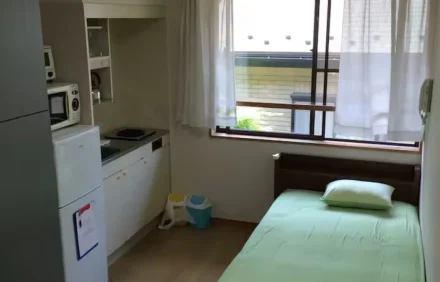
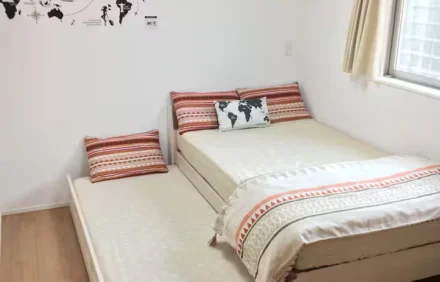
Autumn in Japan rewards the apartment staycationer. Hotels in Kyoto and Tokyo’s prime foliage areas spike in price and fill months in advance. A vacation rental offers three advantages:
Space for layers: Autumn mornings are cold and afternoons warm. A rental with a proper closet and living space makes it easier to manage clothing.
Kitchen access: Autumn produce is cheap and abundant. Cooking a simple meal of seasonal vegetables and grilled fish from a local market is a staycation highlight.
Early starts: The best autumn photography requires arriving at temples before 8 AM. A nearby rental lets you walk there before the tour buses arrive.
Recommended neighborhoods: Higashiyama or Arashiyama in Kyoto; Shinjuku or Ikebukuro in Tokyo for day-trip access; Gora or Miyanoshita in Hakone.
Autumn Koyo Forecast and Timing
Autumn color follows a predictable southward progression:
- Mid-September to early October: Hokkaido, Tohoku, Northern Alps
- Mid-October to early November: Tokyo, Nikko, Nagano, Kanazawa
- Mid-November to early December: Kyoto, Osaka, Nara, Hiroshima
- Late November to mid-December: Kyushu, Okinawa (limited)
Check the annual forecast from the Japan Weather Association or local tourism boards. The peak window for any single location is typically two to three weeks.
Practical Tips for an Autumn Staycation
- Book early: Kyoto accommodations for mid-November should be booked by August.
- Dress in layers: Mornings can be 8 degrees Celsius, afternoons 20 degrees.
- Carry cash: Rural autumn spots and small temples rarely accept cards.
- Photography: Overcast days produce the most saturated leaf colors. Bright sun creates harsh shadows.
- Weekday visits: Temples and gardens are significantly less crowded Monday through Thursday.
Final Thoughts
Autumn in Japan is the season when the country feels most itself. The combination of ancient architecture, natural beauty, and seasonal cuisine creates a staycation experience that is both visually stunning and deeply satisfying. Whether you choose the temple corridors of Kyoto, the mountain roads of Nikko, or the hot spring villages of Hakone, autumn rewards slow travel and early mornings.
Start planning your 2026 autumn staycation early, book your rental in a walkable neighborhood, and prepare to eat very well.