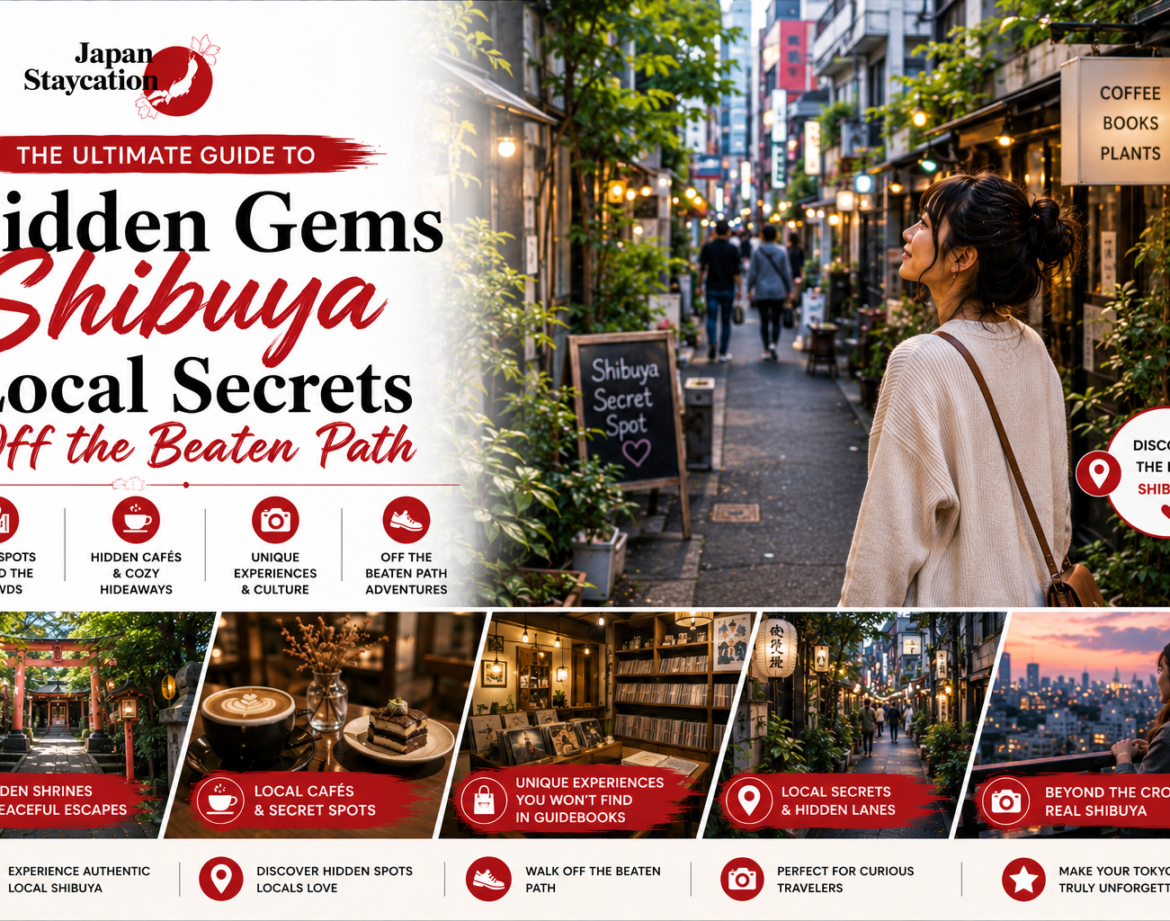
Hidden Gems Shibuya: Local Secrets & Secret Spots Off the Beaten Path
Beyond the Crossing: Real Shibuya
Most visitors to Shibuya experience exactly three things: the famous scramble crossing, the Hachiko statue, and the surrounding mega-malls. But the hidden gems shibuya locals cherish reveal a completely different neighborhood—one where jazz musicians have played the same clubs for decades, vintage curators hunt Tokyo’s best streetwear, and locals drink shoulder-to-shoulder in alley bars barely wider than a closet.
This guide uncovers Shibuya’s secret side. Whether you’re planning a Tokyo staycation or just want to see beyond the Instagram-famous crossing, these hidden gems shibuya offers will transform your understanding of what Shibuya truly has in store. The best discoveries here require curiosity, comfortable walking shoes, and a willingness to get slightly lost.
Nonbei Yokocho: Tokyo’s Tiniest Bars
Tucked behind the bustling Shibuya Station area, Nonbei Yokocho (Drunkard’s Alley) is a narrow lane lined with microscopic bars that seat six to eight people maximum. Dating back to the immediate post-war period, this alley was originally a black market area that evolved into one of Tokyo’s most atmospheric drinking districts.
Each bar in Nonbei Yokocho has a distinct personality. Some are whiskey dens with hundreds of bottles crammed behind the counter. Others specialize in yakitori grilled over charcoal at the bar itself. Many are regulars-only places where the bartender knows every customer’s name and drink. The unspoken rule is: if there’s an empty seat, you’re welcome. Don’t worry about language barriers—a smile and “kanpai” (cheers) transcends everything.
Recommended bars in Nonbei Yokocho:
- Tight — A standing-only bar famous for its craft cocktails and friendly owner who speaks English. The smoked old fashioned is legendary.
- Anxiety — Don’t let the name fool you; this tiny whiskey bar is warm and welcoming with an impressive Japanese whisky selection.
- Cha Cha Hana — A yakitori specialist where the owner grills chicken skewers to perfection while engaging every customer in conversation.
Most bars open around 6:00 PM and close by midnight (or when the last customer leaves). Budget ¥3,000-5,000 for a few drinks and snacks. Cash is still preferred in most establishments.
Cat Street: Vintage & Streetwear Paradise
Running between Shibuya and Harajuku, Cat Street (officially named Kyu-Shibuya-gawa Yuhodoro) is Tokyo’s premier destination for vintage fashion, streetwear, and independent boutiques. Unlike the chain stores of Shibuya Center-gai, Cat Street features curated shops where buyers travel globally to source rare pieces.
Best vintage and streetwear shops on Cat Street:
- RAGTAG — Japan’s largest secondhand luxury chain, offering authenticated designer pieces at 30-70% below retail. The Shibuya location specializes in avant-garde Japanese designers.
- CHICAGO — A legendary thrift store with multiple locations along Cat Street. Their Omotesando branch is particularly strong in vintage American denim and military wear.
- WEGO — Affordable Japanese streetwear combining Harajuku aesthetics with wearable everyday pieces. Great for trend pieces without breaking the bank.
- SEX POT ReVeNGe — Visual kei and punk-inspired fashion for those seeking Tokyo’s more alternative side.
- Rei Zusuku — A hidden second-floor boutique specializing in rare vintage band t-shirts and 90s streetwear grails.
Cat Street is best explored on foot on a weekday afternoon when shops are less crowded and staff have time to chat. Many stores open around 11:00 AM and close by 8:00 PM. The entire stretch takes about 45 minutes to walk, but budget at least two hours if you plan to browse seriously.
Secret Jazz Bars & Live Music
Shibuya has been Tokyo’s jazz capital since the 1960s, and while the golden age has passed, a dedicated circuit of intimate clubs continues to host world-class musicians nightly. These hidden gems shibuya jazz lovers protect fiercely offer some of Japan’s most authentic live music experiences.
Essential jazz and live music venues:
- Shibuya Pit Inn — Operating since 1966, this is Tokyo’s most famous jazz club. The “New Jazz Quintet” and other house bands perform regularly, and international touring musicians often play surprise late sets. Cover charge: ¥2,500-4,000.
- JZ Brat — A sophisticated venue in the Shibuya Stream building featuring top Japanese and international jazz artists. The acoustics are exceptional.
- Budo Grape at Ruby Room — A basement live house hosting indie bands, jazz ensembles, and experimental music. Cover is typically ¥1,500-2,500 with a drink.
- Organ Jazz Club — Hidden in a building near Shibuya Station, this tiny bar features a vintage Hammond organ and rotating musicians who jam until the early morning.
For the best experience, check Tokyo Jazz Site or the venue’s social media for schedules, and arrive early for better seating. Many clubs serve excellent bar food alongside drinks.
Shibuya Sky: Best Non-Tourist Times
The Shibuya Sky observation deck atop the Shibuya Scramble Square building has become one of Tokyo’s most popular viewpoints since opening in 2019. While most visitors crowd in during sunset hours, the hidden gems shibuya approach involves visiting at strategically quieter times.
Best times to visit Shibuya Sky:
| Time | Crowd Level | Experience |
|---|---|---|
| 9:00 AM opening | Very Low | Clear morning views, empty outdoor rooftop |
| Weekday 2:00 PM | Low-Moderate | Good light for photography, easy bar access |
| Weekday sunset | Moderate | Beautiful but less packed than weekends |
| Friday/Saturday 8:00 PM | High | Night city lights, lively atmosphere |
| Rainy days | Very Low | Moody atmospheric views, indoor gallery uncrowded |
Tickets cost ¥2,000 for adults (¥1,600 if booked online in advance). The outdoor rooftop is the highlight—bring a jacket as it can be windy. The digital art installations on the 46th floor are worth exploring, especially the light-and-mirror rooms that create surreal photo opportunities.
Hidden Gardens & Green Escapes
Shibuya’s concrete intensity makes its hidden green spaces feel like genuine sanctuaries. These gardens and parks offer peaceful escapes within minutes of the busiest intersections, and they represent another layer of hidden gems shibuya nature lovers treasure.
- Yoyogi Park (southeast corner) — While the main park near Harajuku is famous, its Shibuya-adjacent sections contain quieter wooded areas and ponds where locals practice tai chi and feed koi. The gingko tree tunnel is spectacularly golden in November.
- Bunkamura Garden — Tucked behind the Bunkamura cultural complex, this small but beautifully landscaped garden features seasonal plantings and quiet benches rarely used by tourists.
- Shibuya Community Garden — A participatory urban garden project where locals grow vegetables and herbs. Visitors are welcome to walk through and occasionally join weekend workshops.
- Konno Hachimangu Shrine Grounds — A Shinto shrine near Shibuya Station with mature trees and a small but atmospheric garden. The contrast between the surrounding skyscrapers and the shrine’s tranquility is striking.
Local Markets & Neighborhood Shops
Beyond the flagship department stores, Shibuya contains neighborhood-scale markets and specialty shops that serve local residents. These are the hidden gems shibuya shoppers and foodies explore when they want to experience daily life in one of Tokyo’s most dynamic districts.
- Shibuya Farmer’s Market — Held Saturdays near the station’s west exit, this small market sells organic vegetables from regional farms, handmade pickles, and artisanal bread. Arrive before 11:00 AM for the best selection.
- Shibuya Ginza Shotengai — A covered shopping arcade north of the station featuring fishmongers, tofu shops, and family-run grocery stores that have served the neighborhood for generations. The contrast with Shibuya’s youth culture is fascinating.
- Daiso Shibuya (12 floors) — While not exactly hidden, this 100-yen shop megastore is an essential local shopping experience. Each floor specializes in different categories—from kitchenware to cosmetics to gardening tools.
- Tokyu Hands (now Hands) — A creative lifestyle store spanning multiple floors with everything from DIY supplies to Japanese stationery and camping gear. The Shibuya location is particularly strong in craft and hobby sections.
Insider Tips for Exploring Hidden Shibuya
Maximize your discovery of hidden gems shibuya locals protect with these strategies:
- Walk the backstreets between Center-gai and Cat Street: The narrow lanes connecting these main thoroughfares contain the highest concentration of tiny bars, vintage shops, and hidden restaurants.
- Use Shibuya’s multiple station exits strategically: The Hachiko Exit leads to the crossing and youth culture. The New South Exit opens toward quieter residential areas. The West Exit connects to bus terminals and less-touristy dining.
- Visit basement food halls (depachika) at Seibu and Tokyu: These underground gourmet markets offer everything from bento boxes to wagashi sweets to international ingredients. Perfect for picnic supplies or gifts.
- Explore Shibuya at night: The neighborhood transforms after 10:00 PM when office workers join students and creatives in the backstreet bars. Many hidden spots don’t even open until evening.
- Look up: Some of Shibuya’s best restaurants, galleries, and shops occupy second through fifth floors of otherwise unremarkable buildings. If you only look at street level, you’ll miss half the neighborhood.
- Learn the local craft coffee scene: Shibuya has become Tokyo’s third-wave coffee capital. Streamer Coffee, About Life Coffee Brewers, and Fuglen Tokyo serve exceptional single-origin brews.
Frequently Asked Questions
What are the best hidden gems shibuya for first-time visitors?
First-time visitors should prioritize Nonbei Yokocho for atmosphere, Cat Street for shopping, and Shibuya Sky at off-peak hours for views. Add Yoyogi Park’s quieter sections and one jazz club for a balanced introduction to Shibuya’s secret side. These hidden gems shibuya offers are accessible, safe, and offer authentic experiences without requiring advanced Japanese language skills.
Is Shibuya safe to explore at night?
Yes, Shibuya is one of Tokyo’s safest districts at all hours. The main streets remain busy until the last trains around midnight, and even the narrow backstreets of Nonbei Yokocho are well-lit and policed. Use normal urban awareness—keep valuables secure and avoid unlit alleys—but Tokyo’s low crime rate makes nighttime exploration comfortable even for solo travelers.
How do I find Cat Street from Shibuya Station?
From Shibuya Station, take the Cat Street exit (also marked toward Omotesando) and walk northwest along the stream path. The street runs roughly parallel to Omotesando-dori, about 200 meters south. Look for the distinctive bridge crossings over the former Shibuya River—now a landscaped urban stream. The walk from Shibuya to Harajuku along Cat Street takes 20-30 minutes with shopping stops.
Are the vintage shops on Cat Street expensive?
Cat Street offers vintage shopping across all budgets. Stores like WEGO and Chicago sell affordable pieces starting at ¥1,000-2,000. RAGTAG’s luxury section features authenticated designer items at significant discounts. True vintage “grails”—rare band tees, archive pieces, and limited sneakers—can command ¥50,000+ at specialist dealers. Most shops clearly display prices, and browsing is welcome even without purchasing.
What is the best time to visit Nonbei Yokocho?
The ideal time to visit Nonbei Yokocho is between 7:00 PM and 10:00 PM on weekdays. Most bars open by 6:00 PM, and the early evening offers a better chance of finding seats in the tiny establishments. Friday and Saturday nights become crowded after 9:00 PM, while Sunday evenings tend to be quieter. Many bars close around midnight or when the last customer leaves.
Can I visit Shibuya Sky without advance booking?
Same-day tickets are sometimes available at the Shibuya Sky ticket counter, but advance online booking is strongly recommended—especially for sunset slots which sell out days ahead. Booking online also saves ¥400 per ticket (¥1,600 vs ¥2,000). If visiting without a reservation, arrive at 9:00 AM opening for the best chance of immediate entry with minimal crowds.
Planning Your Tokyo Staycation? Explore our comprehensive The Complete Tokyo Staycation Guide 2026 for neighborhood comparisons, budget tips, and hidden gems across Japan’s capital.