Holiday Apartment Tokyo 2026: Best Vacation Rentals by Neighborhood
Why Choose a Holiday Apartment in Tokyo
Staying in a holiday apartment gives you the freedom to live like a local while enjoying all the comforts of home. Unlike hotels, Tokyo holiday apartments come with fully equipped kitchens, washing machines, and separate living spaces essential amenities for families or travelers planning extended stays. In 2026, the vacation rental market in Tokyo has expanded dramatically, offering options from Shibuya lofts to Asakusa traditional apartments.
Best Neighborhoods for Holiday Apartments in Tokyo
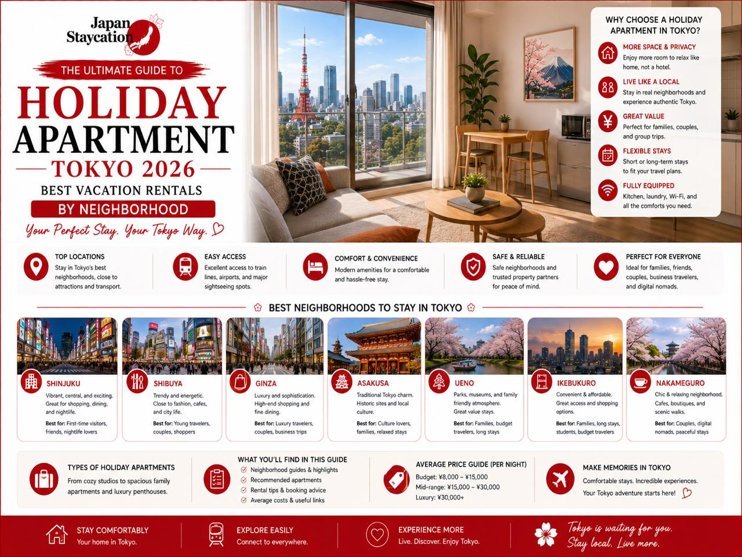
Shibuya: Perfect for first-time visitors who want to be at the center of Tokyos energy. Holiday apartments here put you within walking distance of the famous crossing, Meiji Shrine, and endless dining options. Expect compact but stylish units.
Asakusa: Ideal for travelers seeking traditional Tokyo charm. Asakusa holiday apartments are often located in historic buildings near Senso-ji Temple, offering a unique cultural experience with modern conveniences.
Shinjuku: The entertainment and business hub. Shinjuku holiday apartments cater to night owls and business travelers alike, with excellent transport links to every corner of the city.
Setagaya: Best for families and long-term staycationers. Spacious holiday apartments, green parks, and a relaxed atmosphere make Setagaya feel like a home away from home.
What to Expect from Tokyo Holiday Apartments
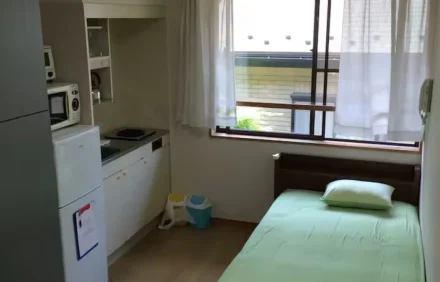
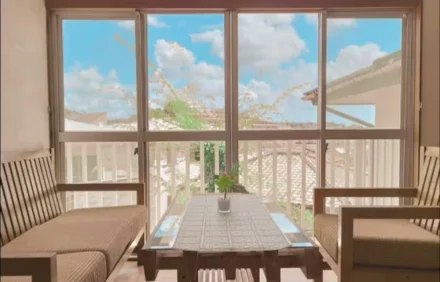
Tokyo holiday apartments typically range from 25-square-meter studios to 80-square-meter family units. Most include pocket Wi-Fi, rice cookers, and basic cooking utensils. Higher-end properties may offer rooftop terraces, automated parking systems, and concierge services. Prices vary from JPY 6,000 per night for budget studios to JPY 30,000 per night for luxury apartments in Ginza or Roppongi.
How to Book a Holiday Apartment in Tokyo
Booking a Tokyo holiday apartment is simple through platforms like Airbnb, Booking.com, or specialized Japan vacation rental sites. For the best rates, book at least two months in advance, especially during cherry blossom season (late March to early April) and autumn foliage season (November). Always read reviews carefully and confirm that the property accepts foreign guests, as some Japanese rentals have nationality restrictions.
Holiday Apartment vs Hotel: Which Is Better
For stays longer than five nights, a holiday apartment almost always offers better value. A family of four can save over JPY 100,000 on a two-week trip by cooking some meals at home instead of dining out for every meal. Plus, having separate bedrooms means parents and children can maintain their own schedules without disturbing each other.
Tips for a Perfect Tokyo Holiday Apartment Stay
- Choose apartments near major train stations (within 10-minute walk) for easy exploration.
- Check if the apartment has an elevator carrying luggage up five flights of stairs is no fun.
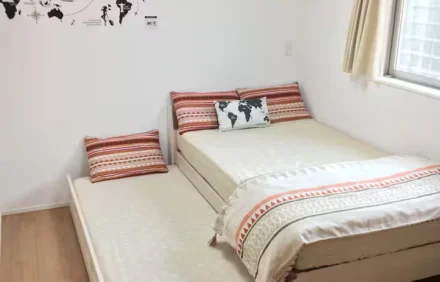
- Confirm bedding arrangements; Japanese apartments often use futons instead of Western beds.
- Look for properties with pocket Wi-Fi included; renting separately costs JPY 800-1,500 per day.
- Ask about trash separation rules; Japan has strict recycling guidelines.
FAQ About Tokyo Holiday Apartments
Are Tokyo holiday apartments legal? Yes, since the 2018 minpaku law update, properly registered vacation rentals operate legally throughout Tokyo.
Do I need to speak Japanese? Not necessarily. Most rental platforms and many property managers communicate in English.
Can I check in late at night? Many holiday apartments offer self-check-in with lockboxes or smart locks, allowing 24-hour arrivals.
Are holiday apartments cheaper than hotels? For stays over 5 nights, yes. For short stays, hotels may be more convenient.
What is the cancellation policy? Policies vary by property. Most offer full refunds up to 30 days before check-in.
Last updated: August 2026