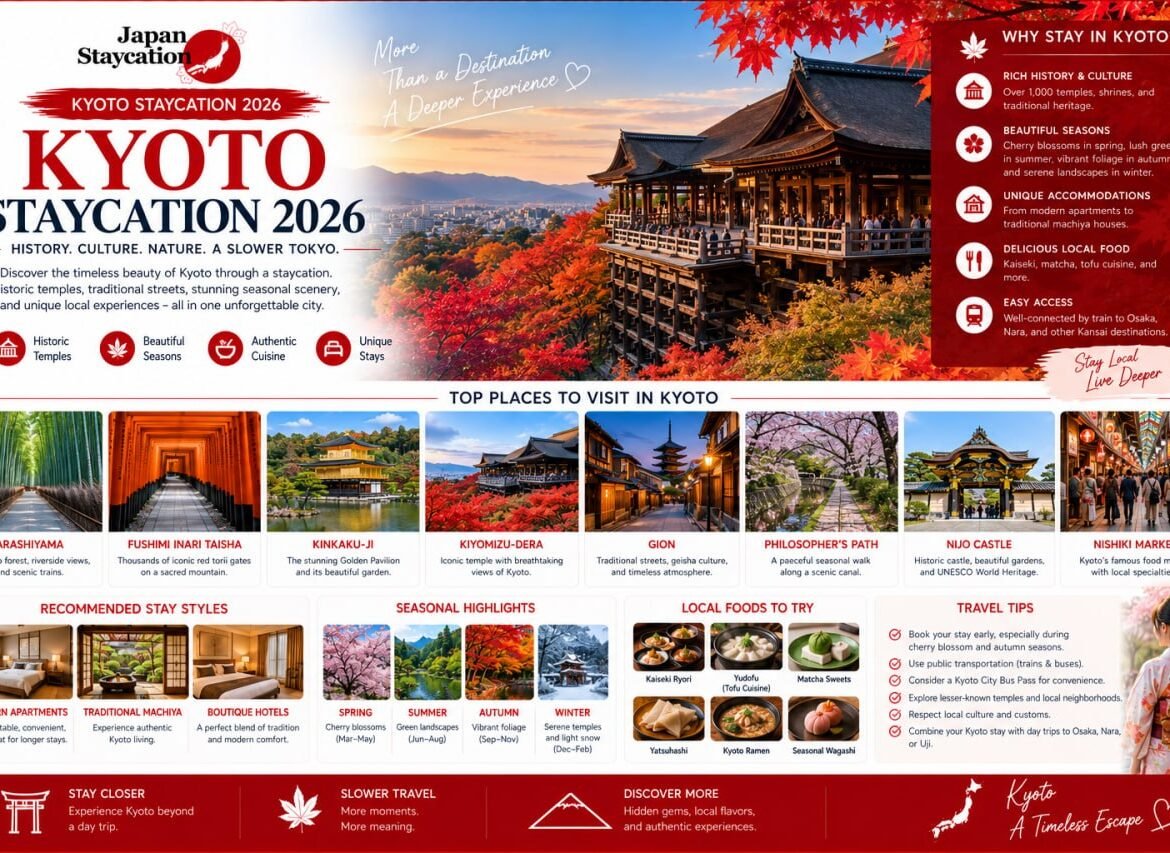
Kyoto Staycation 2026: Complete Guide to Temples, Districts & Vacation Rentals
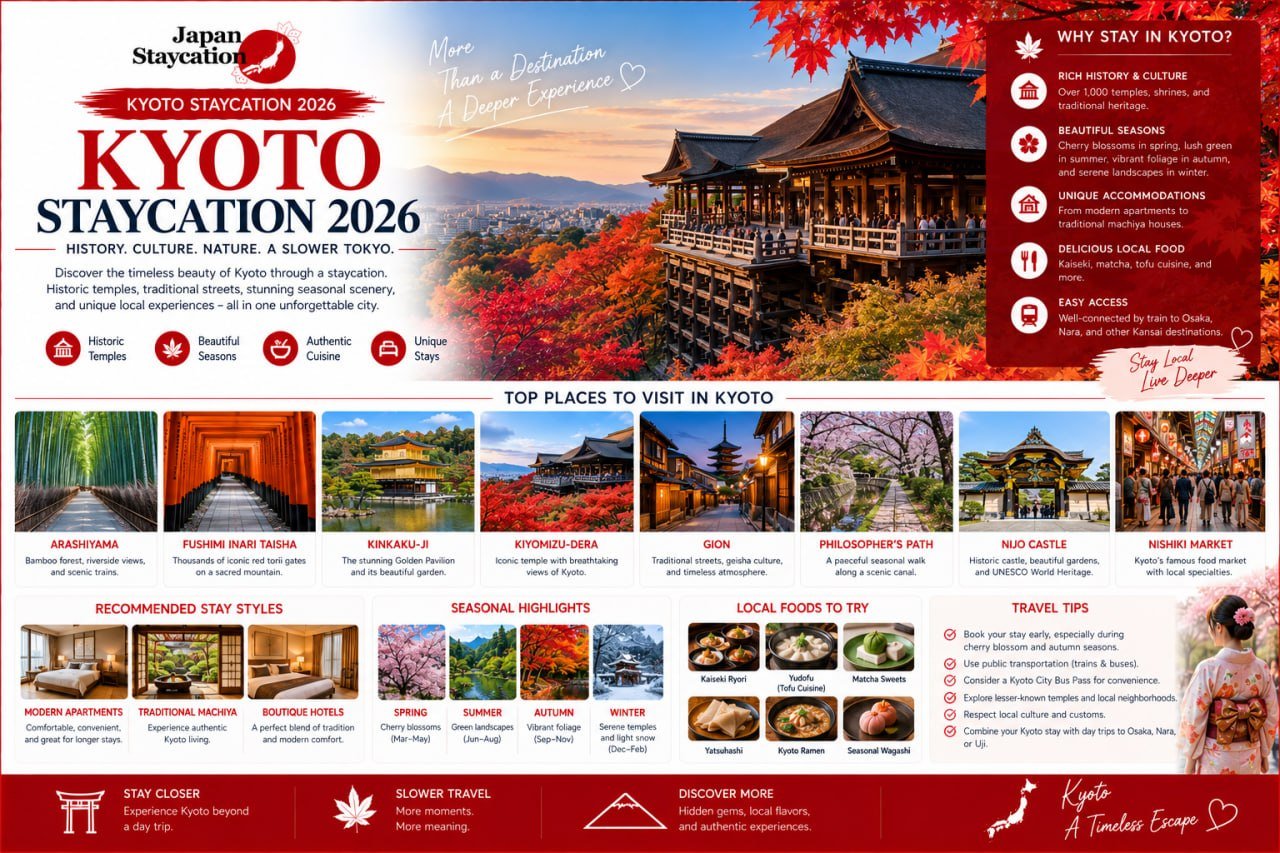
Kyoto
Staycation 2026: Complete Guide to Temples, Districts & Vacation
Rentals
Kyoto is not just a destination—it is an experience. As Japan’s
former imperial capital for over a thousand years, this city offers a
rare blend of ancient tradition and quiet modernity that makes it the
ultimate staycation spot for 2026.
Whether you are planning a week-long escape or a month-long remote
work retreat, Kyoto delivers something no other Japanese city can: the
feeling of stepping back in time while enjoying all the comforts of
contemporary living.
Why Choose Kyoto for
Your 2026 Staycation
Unlike Tokyo’s relentless energy, Kyoto moves at a deliberately
slower pace. Here, mornings begin with temple bells rather than train
announcements. Afternoons drift through bamboo groves and tea houses.
Evenings settle into the golden glow of lantern-lit alleys in Gion.
For staycation travelers, Kyoto offers three unmatched
advantages:
Walkable Scale: Most major attractions sit within a
compact area. You can cycle from Kinkaku-ji to Gion in under 30 minutes,
making car rentals unnecessary.
Seasonal Drama: Spring cherry blossoms at
Philosopher’s Path, summer fireworks over the Kamo River, autumn maple
explosions at Arashiyama, and winter mist over the torii gates of
Fushimi Inari. Every season redecorates the city.
Living Heritage: Kyoto is home to 17 UNESCO World
Heritage sites, over 1,600 Buddhist temples, and 400 Shinto shrines. But
more importantly, it is a city where traditional crafts, kaiseki
cuisine, and geiko culture still thrive as daily practices rather than
museum exhibits.
Best
Neighborhoods for Your Staycation Rental
Gion &
Higashiyama: The Classic Kyoto Experience
Staying in Gion or the adjacent Higashiyama district places you
within walking distance of Kiyomizu-dera, Yasaka Shrine, and the
preserved wooden machiya townhouses that define old Kyoto. This is the
area most visitors picture when they dream of the city.
Vacation rental options here range from: – Restored
machiya townhouses with tatami rooms and inner gardens (USD 120-250 per
night) – Boutique apartments in converted tea merchant buildings (USD
80-150 per night) – Modern serviced apartments along the Kamo River (USD
90-170 per night)
The trade-off is authenticity versus convenience. Machiya are
beautiful but can have steep staircases and limited insulation. For
longer stays, a serviced apartment with kitchen facilities and heating
might be more practical.
Best for: First-time visitors, photographers,
culture enthusiasts
Arashiyama: Nature at Your
Doorstep
On the western edge of Kyoto, Arashiyama offers a completely
different staycation rhythm. The famous Bamboo Grove, Tenryu-ji Temple,
and the gently flowing Katsura River create an atmosphere that feels
more like a mountain retreat than a major city neighborhood.
Rental options: – Riverside guesthouses with tatami
balconies overlooking the river (USD 100-200 per night) – Hillside
cottages near the Monkey Park Iwatayama (USD 70-130 per night) –
Traditional ryokan-style vacation homes (USD 150-300 per night)
Arashiyama is quieter in the evenings after day-trippers leave, which
is exactly when the bamboo paths become magical. However, you will need
to travel 20-30 minutes by train to reach central Kyoto attractions.
Best for: Nature lovers, families, extended
stays
Downtown
Kyoto (Kawaramachi & Karasuma): Modern Convenience
If you prefer your staycation with easy metro access, late-night
dining, and supermarkets that stay open past 8 PM, central Kyoto is your
best bet. The Kawaramachi and Karasuma corridors offer the practical
infrastructure that makes longer stays comfortable.
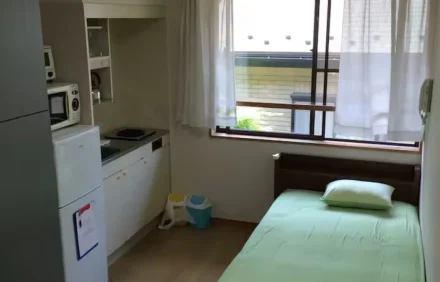
Rental options: – Compact studio apartments near
Nishiki Market (USD 60-100 per night) – Two-bedroom apartments in
converted office buildings (USD 90-140 per night) – Designer lofts near
the Kamo River cycling paths (USD 110-180 per night)
This area lacks the postcard charm of Gion but compensates with
convenience. You are 10 minutes by subway from Kyoto Station, surrounded
by department stores, and within walking distance of Pontocho Alley for
evening dining.
Best for: Digital nomads, foodies, repeat
visitors
Northern Kyoto (Kita-ku):
Local Living
The neighborhoods around Kinkaku-ji and Daitoku-ji in northern Kyoto
offer an authentic residential experience most tourists never see. Here,
you will find neighborhood sento bathhouses, family-run grocery stores,
and quiet morning walks along the Kamo River before the crowds
arrive.
Rental options: – Suburban houses with small gardens
(USD 70-120 per night) – Apartment units in quiet residential complexes
(USD 50-90 per night) – Converted traditional homes near the
philosopher’s path extension (USD 100-160 per night)
This area requires more Japanese language confidence and a
willingness to travel 20-40 minutes to major sights, but the trade-off
is genuine local immersion.
Best for: Long-term staycationers, Japanese
speakers, budget travelers
Top Things to Do
During Your Kyoto Staycation
Must-See Temples and Shrines
Kinkaku-ji (The Golden Pavilion): Arrive before 9 AM
to see the gold-leaf pavilion reflected in its mirror pond without the
tour bus crowds. The surrounding garden paths are worth an additional 30
minutes of exploration.
Fushimi Inari Taisha: The famous 10,000 vermillion
torii gates climbing Mount Inari. Most visitors turn back after 30
minutes, but the full hike to the summit takes about 2 hours and rewards
you with panoramic views and nearly empty paths in the upper
reaches.
Kiyomizu-dera: The wooden stage overlooking Kyoto
has been rebuilt repeatedly since 778 AD. Visit at sunset when the city
glows beneath you. The surrounding Ninenzaka and Sannenzaka preservation
districts are perfect for morning coffee walks.
Ryoan-ji: Famous for its minimalist rock garden,
this Zen temple demands you sit quietly for at least 15 minutes. The
longer you look, the more the garden reveals.
Hidden Gems for Repeat
Visitors
Tofuku-ji’s Zen Gardens: Most visitors skip this
massive temple complex, but its modern rock gardens designed by
Shigemori Mirei in the 1930s are among Japan’s most innovative.
Otagi Nenbutsu-ji: A 45-minute bus ride from central
Kyoto takes you to a hillside temple with 1,200 whimsical rakan statues,
each with a unique expression carved by amateur sculptors in the
1980s.
Kurama to Kibune Hike: A 2-hour mountain trail
connecting two rural temples, passing through cedar forests and ending
at riverside restaurants built over the water on wooden platforms.
Gion Corner Evening: Skip the geisha-spotting tours
and instead book a kaiseki dinner at a Pontocho restaurant overlooking
the Kamo River. If you are lucky, you might glimpse a geiko or maiko
heading to an appointment.
Seasonal Calendar for 2026
March-April: Cherry blossoms peak around early
April. The Philosopher’s Path and Maruyama Park are iconic but crowded.
For a quieter experience, visit Daigo-ji’s sprawling temple grounds in
southeastern Kyoto.
May-June: Fresh green foliage replaces the cherry
blossoms. Moss gardens at Saiho-ji (the Moss Temple) reach peak vibrancy
after spring rains.
July: Gion Matsuri dominates the city for the entire
month, with massive float processions on July 17 and 24. Book
accommodations 3-6 months in advance.
August: Obon lantern floating at Toriimoto and the
dramatic Daimonji bonfire on August 16, when giant Chinese characters
are set ablaze on the mountains surrounding the city.
October-November: Kyoto’s autumn foliage rivals
spring cherry blossoms for beauty. Arashiyama and Tofuku-ji are
spectacular but packed. For a quieter alternative, hike the Takao area
northwest of the city.
December-February: Winter brings fewer tourists,
lower rental prices, and occasional snow that transforms temples into
ink-wash paintings. The New Year’s pilgrimage season (first week of
January) is culturally significant but extremely crowded.
Food & Dining: Eating Like
a Local
Kyoto cuisine operates by different rules than Tokyo or Osaka. Here,
subtlety wins over boldness. Seasonality is religion. And many of the
best meals happen in unmarked wooden buildings that require
reservations.
Budget Meals (USD 8-15) – Nishiki Market: Sample
yuba (tofu skin), tsukemono (pickles), and tamagoyaki from century-old
vendors – Ramen Alley near Kyoto Station: Try local styles including
rich chicken paitan and lighter shio broths – Convenience store onigiri
and Lawson fried chicken: Surprisingly excellent for quick
breakfasts
Mid-Range Dining (USD 25-50) – Pontocho Alley
kaiseki lunch sets: Multi-course seasonal meals at half the dinner price
– Omen in Gion: Udon noodles with seasonal vegetable tempura, a 40-year
local institution – Kichi Kichi Omurice: The viral spinning omurice chef
requires advance reservations but delivers theatrical entertainment
Splurge Experiences (USD 100+) – Michelin-starred
kaiseki in a converted machiya townhouse – Private tea ceremony with
wagashi sweets in a temple garden – Vegetarian shojin ryori at a temple
lodging
Staycation Pro Tip: Kyoto’s supermarket prepared
food sections (especially at Fresco and Life) offer incredible bento
boxes and side dishes after 7 PM at 30-50% discounts. Stock your
vacation rental fridge and enjoy temple-view picnics.
Getting Around Kyoto
Bus: The most extensive network but often crowded on
tourist routes (100, 101, 102, 206). Purchase a one-day pass for
unlimited rides.
Subway: Only two lines but efficient for north-south
travel. Less crowded than buses and unaffected by traffic.
Bicycle: Kyoto is mostly flat and increasingly
bike-friendly. Rent a city bike for USD 10-15 per day. The Kamo River
cycling path runs 15 kilometers through the city.
Walking: Many of Kyoto’s most rewarding experiences
happen between the famous sites. The preserved lane between
Kiyomizu-dera and Yasaka Shrine, the riverside paths, and the covered
arcade shopping streets are best explored on foot.
Taxi/Rideshare: Reasonably priced for short hops,
especially when splitting costs. JapanTaxi app works in Kyoto.
Budget Breakdown
for a 1-Week Kyoto Staycation
| Expense Category | Budget (USD) | Mid-Range (USD) | Luxury (USD) |
|---|---|---|---|
| Accommodation (7 nights) | 350-490 | 630-980 | 1,400+ |
| Food (7 days) | 140-210 | 280-420 | 700+ |
| Transportation | 30-50 | 50-80 | 150+ |
| Attractions & Activities | 50-80 | 100-150 | 300+ |
| Total per person | 570-830 | 1,060-1,630 | 2,550+ |
Note: These estimates exclude flights to/from Kyoto. If arriving via
Kansai International Airport, budget USD 25-30 for the Haruka express
train to Kyoto Station.
Practical Staycation Tips
Booking Timeline: For spring and autumn stays, book
3-6 months ahead. Summer and winter offer more flexibility.
Language: English signage is common at major
attractions, but neighborhood restaurants and local shops may have
minimal English support. Learning basic phrases goes a long way.
WiFi: Most vacation rentals include pocket WiFi or
high-speed internet. Confirm before booking if you need reliable
connection for remote work.
Trash Rules: Kyoto’s garbage separation rules are
strict. Your rental should provide sorting instructions. Convenience
stores accept plastic bottles and cans for recycling.
Temple Etiquette: Remove shoes before entering
temple buildings. Photography is often prohibited inside. Dress modestly
(covered shoulders and knees) out of respect.
Shoes: You will remove your shoes frequently in
Kyoto—at temple entrances, certain restaurants, and traditional
accommodations. Bring slip-on shoes or sandals for convenience.
Sample 7-Day Kyoto
Staycation Itinerary
Day 1: Arrive and settle into your rental. Evening
stroll along Pontocho Alley for dinner.
Day 2: Eastern Kyoto temples—Kiyomizu-dera,
Sannenzaka, Ninenzaka, Kodai-ji. Sunset at Yasaka Shrine.
Day 3: Northern Kyoto—Kinkaku-ji, Ryoan-ji,
Ninna-ji. Afternoon tea in a machiya cafe.
Day 4: Arashiyama day—Bamboo Grove, Tenryu-ji,
Togetsukyo Bridge, Monkey Park.
Day 5: Fushimi Inari Taisha morning hike. Afternoon
at Nishiki Market and downtown shopping.
Day 6: Day trip to Nara (30 minutes by train) for
Todai-ji and deer park. Return for Gion evening.
Day 7: Hidden gems—Otagi Nenbutsu-ji or Kurama hike.
Final kaiseki dinner before departure.
Final Thoughts
Kyoto rewards patience. The city does not reveal itself on a rushed
weekend. It requires mornings when you wake before the tour buses,
evenings when you wander lantern-lit lanes without a map, and afternoons
when you sit in temple gardens long enough to understand why Zen masters
designed them for contemplation.
A staycation in Kyoto is not about checking sites off a list. It is
about inhabiting a city that has perfected the art of quiet beauty over
a thousand years. Give it time, and Kyoto will give you something no
other destination can.
Planning your Kyoto staycation? Browse our curated vacation
rentals in Gion, Arashiyama, and central Kyoto neighborhoods to find
your perfect base for exploring Japan’s most timeless city.
Author: Ayana Sugiwara Published:
September 2026 Category: Japan Staycation Guides