Best Things to Do in Osaka 2026: A Complete Visitor’s Guide
Best Things to Do in Osaka 2026: A Complete Visitor’s Guide
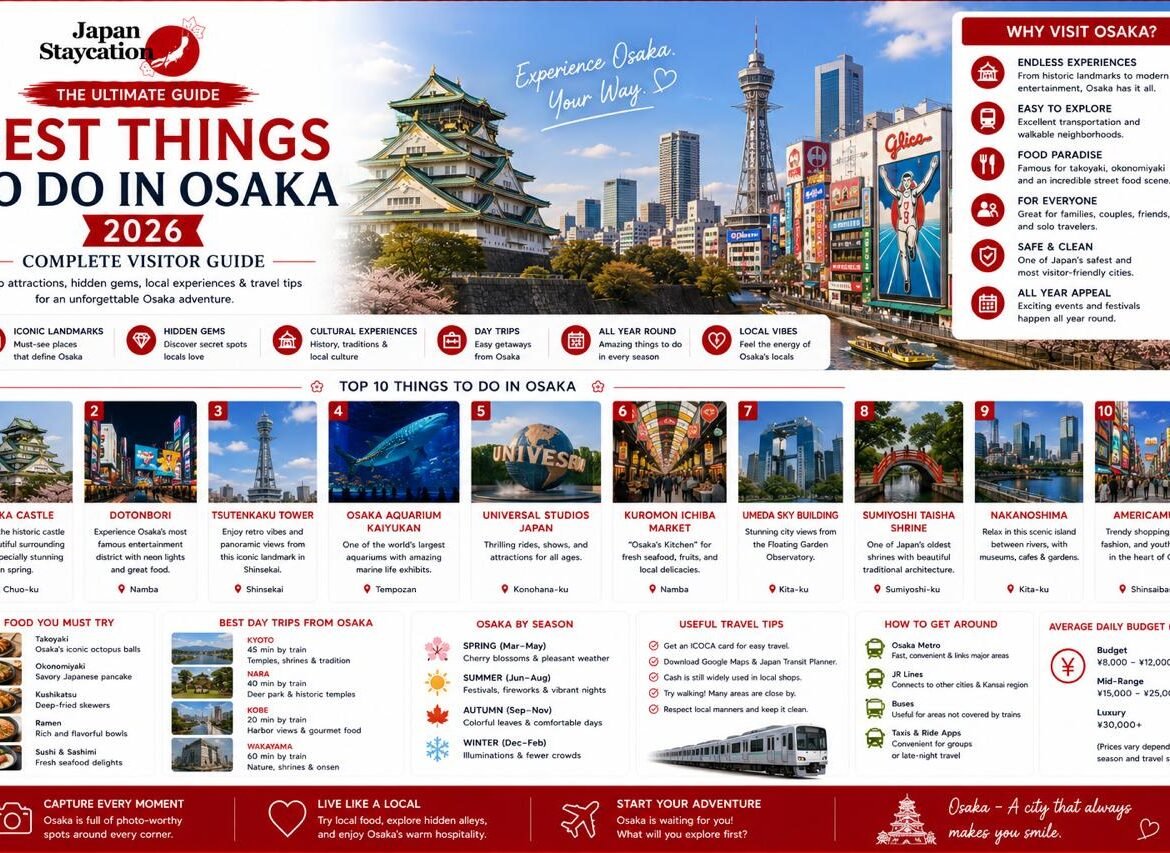
Osaka does not ask for permission. It eats loudly, laughs loudly, and welcomes visitors with a warmth Tokyo rarely matches. Japan’s third-largest city is often called the nation’s kitchen, but that label understates what Osaka actually offers. In 2026, the city blends medieval castle grounds with neon-lit entertainment districts, street food culture with Michelin-starred dining, and working-class authenticity with cutting-edge architecture. This guide covers the best things to do in Osaka for every type of traveler.
Osaka’s Must-See Landmarks
1. Osaka Castle and Castle Park
The original Osaka Castle was destroyed and rebuilt multiple times. The current structure, dating from 1931 and reinforced in the 1990s, houses a museum that tells the story of Toyotomi Hideyoshi’s unification of Japan. The real highlight is the surrounding park: 106 hectares of moats, walls, and seasonal gardens. Cherry blossom season in early April transforms the park into one of Japan’s most photographed hanami spots.
2026 update: New English audio guides and expanded night illumination programming make evening visits more rewarding than in previous years.
2. Dotonbori Canal District
The Glico running man sign. The giant moving crab. The pufferfish lanterns. Dotonbori is sensory overload by design. The canal-side district combines restaurants, theaters, shops, and street performers into a single neon-lit corridor that operates until the first train. This is where Osaka’s “eat until you drop” culture lives.
Best time: After 6 PM, when every sign is lit and the crowd energy peaks.
3. Kuromon Ichiba Market
Known as “Osaka’s Kitchen,” Kuromon Ichiba has operated since the Edo period. Today, 150 stalls sell everything from sea urchin and Wagyu beef to pickled vegetables and matcha soft serve. Unlike Tokyo’s Tsukiji, Kuromon is entirely open to tourists. Vendors offer samples, explain preparation methods, and happily photograph visitors holding oversized seafood skewers.
4. Shinsekai and Tsutenkaku Tower
Shinsekai was built in 1912 as a futuristic entertainment district. A century later, it feels charmingly retro. The Tsutenkaku Tower, modeled after the Eiffel Tower, offers panoramic views and a golden statue of the god of luck at its summit. The surrounding streets are filled with kushikatsu (deep-fried skewer) restaurants, retro game arcades, and shops selling Osaka-themed souvenirs.
5. Sumiyoshi Taisha Shrine
One of Japan’s oldest shrines, founded in the 3rd century, predates Buddhist influence in Japan. The distinctive arched taiko-bashi bridges and the lack of foreign tourists compared to Kyoto’s shrines make Sumiyoshi Taisha a peaceful counterbalance to Osaka’s urban intensity. The shrine grounds are particularly beautiful in early morning fog.
Osaka’s Food Culture: Beyond Takoyaki
Osaka residents will tell you their city invented Japanese street food. While that claim is debated, the quality and variety are not.
Takoyaki: The Osakan Signature
Octopus balls cooked in molded pans, topped with takoyaki sauce, mayonnaise, bonito flakes, and green onion. The best stalls are in Dotonbori and Shinsekai. Look for shops with long queues and visible cooking action. A good takoyaki should be crispy outside, molten inside, and dangerously hot.
Okonomiyaki: The Savory Pancake
Literally “grilled as you like,” okonomiyaki combines cabbage, egg, flour, and your choice of pork, seafood, or cheese on a hot griddle. Many restaurants let you cook your own at tableside teppan grills. The Osaka style mixes everything into batter before grilling. The Hiroshima style layers ingredients. Both are available across the city.
Kushikatsu: Deep-Fried Everything
Breaded and deep-fried skewers of meat, seafood, vegetables, and even dessert items. The rule at every kushikatsu shop: no double-dipping in the shared sauce pot. Shinsekai claims to have invented the dish, and dozens of competing shops still operate in the district.
Kitashinchi: Michelin-Level Dining
Osaka’s high-end dining district, located between Osaka and Umeda stations, houses more Michelin-starred restaurants per block than almost any district in Japan. The contrast with Dotonbori’s street chaos is extreme and intentional. Kitashinchi is where Osaka demonstrates that “kitchen of Japan” does not only mean casual food.
Neighborhood Personality Guide
| Neighborhood | Vibe | Best For | Best Time |
|---|---|---|---|
| Dotonbori | Chaotic, neon, loud | Street food, nightlife, photos | Evening, after 7 PM |
| Shinsekai | Retro, working-class, nostalgic | Kushikatsu, vintage arcades | Lunch or dinner |
| Umeda | Modern, commercial, upscale | Shopping, business hotels | Daytime, weekday lunch |
| America Mura | Youth culture, fashion, energy | Vintage shops, street fashion | Afternoon to evening |
| Tennoji | Local, residential, authentic | Local markets, temple visits | Morning |
Cultural Experiences Unique to Osaka
Osaka-Kyoto-Nara Day Tripping
Osaka’s location makes it the ideal base for exploring the Kansai region. Kyoto is 15 minutes by Shinkansen. Nara, with its free-roaming deer and Todai-ji Temple, is 45 minutes by train. Kobe’s beef restaurants and harbor views are 30 minutes away. Many visitors prefer staying in Osaka, where hotels are cheaper and dining is better, while making day trips to the more famous neighboring cities.
Bunraku Puppet Theater
The National Bunraku Theater in Osaka is one of the last places in the world to see traditional Japanese puppet theater performed at professional level. Three puppeteers operate each figure in full view of the audience, accompanied by shamisen music and a narrator. Performances are held several times monthly. English audio guides are available.
Baseball at Kyocera Dome or Hanshin Koshien Stadium
Japanese baseball is louder, more organized, and more festive than its American counterpart. The Osaka-based Hanshin Tigers have one of the most devoted fan bases in sports. Even if you do not understand the rules, the synchronized cheering, brass bands, and seventh-inning balloon releases create an atmosphere unlike any sporting event outside Japan.
Seasonal Osaka: When to Visit
| Season | Months | Best Activities | Crowd Level |
|---|---|---|---|
| Cherry Blossom | Late March-Early April | Osaka Castle Park, Kema Sakuranomiya | Extreme |
| Summer Festival | July | Tenjin Matsuri (one of Japan’s top three festivals) | Extreme |
| Autumn | November | Minoo Park maple viewing, temple illuminations | Moderate |
| Winter Illumination | December-January | Midosuji Avenue lights, Universal Studios Christmas | Moderate |
Day Trips from Osaka
- Kyoto (15 min by Shinkansen): Fushimi Inari Shrine, Kinkaku-ji, Gion district
- Nara (45 min): Todai-ji Temple, Nara Park deer, Kasuga Taisha Shrine
- Kobe (30 min): Harborland, Chinatown, Arima Onsen hot springs
- Himeji (90 min): Japan’s most beautiful original castle, UNESCO World Heritage
- Koyasan (2 hours): Buddhist temple stay, Okunoin Cemetery, morning prayers
Practical Tips for Osaka Visitors
- IC Cards: ICOCA works across Kansai. Suica and Pasmo from Tokyo also function here.
- Dialect: Osaka-ben is distinct. Locals appreciate attempts at “ookini” (thank you) and “maido” (hello).
- Queuing: Unlike Tokyo’s silent lines, Osaka queues are chatty and relaxed.
- Eating etiquette: Slurping noodles is encouraged. Talking with food in your mouth is acceptable at standing bars.
- Last trains: Osaka’s subway ends around midnight. Taxis are expensive but plentiful.
Frequently Asked Questions
Is Osaka better than Tokyo for tourists?
Osaka is friendlier, cheaper, and more food-focused. Tokyo is larger, more polished, and offers more variety. First-time visitors to Japan should ideally see both.
How many days do I need in Osaka?
Three days covers the city. Add two more if you plan day trips to Kyoto and Nara.
Is Osaka safe at night?
Yes, particularly in Dotonbori and Umeda, which are brightly lit and full of people until late. Standard precautions apply in less central areas.
Can I use Tokyo’s IC card in Osaka?
Yes. Suica, Pasmo, and ICOCA are interchangeable across Japan’s major transit networks.
What is the best area to stay in Osaka?
Namba or Dotonbori for nightlife and food. Umeda for business and shopping. Tennoji for local atmosphere and lower prices.
Conclusion
Osaka does not try to impress you. It feeds you, talks to you, and assumes you will come back. The city’s confidence comes from knowing it is the most approachable major city in Japan. You do not need to understand Japanese history to enjoy Osaka. You just need an empty stomach and a willingness to explore.
Considering a longer stay? Read our Osaka Staycation Guide 2026 for neighborhood breakdowns and monthly rental options.