Best Things to Do in Tokyo 2026: A Complete Visitor’s Guide
Best Things to Do in Tokyo 2026: A Complete Visitor’s Guide
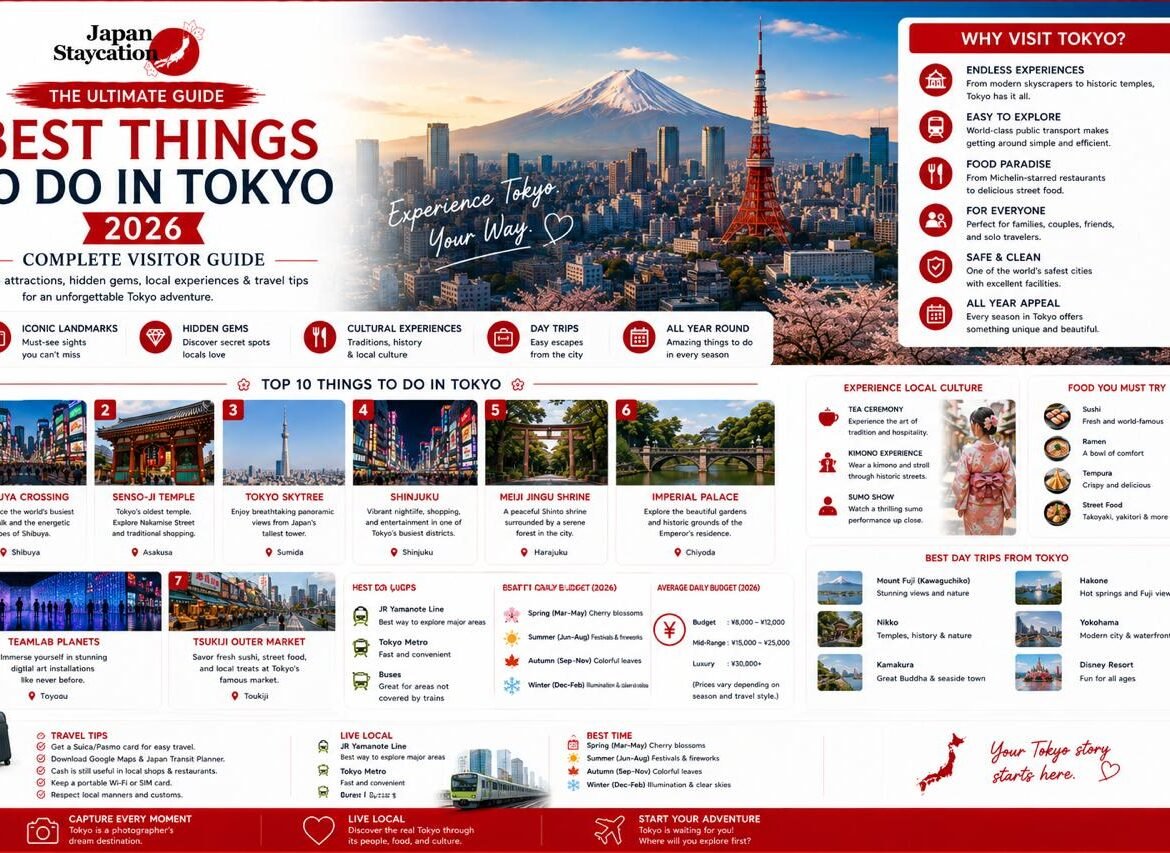
Tokyo is not a city you visit. It is a city you experience. In 2026, Japan’s capital offers more than ever for first-time visitors and returning travelers alike. From ancient temples hidden between skyscrapers to digital art museums that rewrite what “exhibition” means, Tokyo rewards curiosity at every turn. This guide covers the best things to do in Tokyo in 2026, organized by neighborhood and travel style.
Iconic Tokyo: What Every First-Time Visitor Should See
1. Senso-ji Temple in Asakusa
Tokyo’s oldest temple, founded in 645 AD, remains its most visited spiritual site. The Nakamise shopping street leading to the temple has sold traditional snacks and souvenirs for centuries. Arrive before 8 AM to experience the temple grounds without crowds. The pagoda and Thunder Gate photograph beautifully in morning light.
2026 update: The surrounding Asakusa district has seen a revival of traditional craft workshops. Several pottery and calligraphy studios now offer English-language sessions for visitors.
2. teamLab Borderless / Planets Digital Art Museums
teamLab redefined immersive art. In 2026, their Tokyo installations remain among the most photographed attractions in Japan. Borderless in Odaiba and Planets in Toyosu offer completely different experiences. Planets requires visitors to walk barefoot through knee-deep water in some rooms. Borderless emphasizes borderless, interconnected rooms that shift and respond to movement.
Tip: Book tickets at least two weeks in advance. Same-day entry is rarely available.
3. Shibuya Crossing and Hachiko Statue
The busiest pedestrian crossing in the world is not just a photo opportunity. It is a lesson in organized chaos. Cross at dusk when the surrounding building screens light up. Afterward, visit the Hachiko statue outside Shibuya Station, honoring the loyal Akita who waited for his owner every day for nine years.
Nearby: Shibuya Sky observation deck offers 360-degree views from 230 meters above the crossing.
4. Meiji Shrine and Yoyogi Park
A Shinto shrine dedicated to Emperor Meiji sits within a 700,000-tree forest in the heart of Tokyo. The contrast between the tranquil shrine grounds and the adjacent Harajuku fashion district is one of Tokyo’s defining experiences. Yoyogi Park hosts street performers, food vendors, and cherry blossom viewers depending on the season.
5. Tsukiji Outer Market
While the inner wholesale market moved to Toyosu in 2018, the Tsukiji Outer Market remains one of Tokyo’s best food destinations. Over 400 stalls sell fresh seafood, tamagoyaki (sweet omelet), wagyu beef skewers, and matcha sweets. Go hungry and early, ideally between 8 and 10 AM.
Neighborhood Guides: Where to Explore
Harajuku and Omotesando: Fashion and Design
Takeshita Street is the center of teen fashion and crepe culture. Omotesando, one block south, is Tokyo’s Champs-Elysees, lined with flagship stores from Prada, Dior, and local architects. The contrast between the two streets is deliberate and fascinating.
Do not miss: The Nezu Museum, with one of Japan’s finest collections of pre-modern East Asian art, set within a stunning garden.
Akihabara: Anime, Electronics, and Otaku Culture
Even visitors with zero interest in anime find Akihabara mesmerizing. Multi-story arcades, maid cafes, retro game stores, and electronics retailers create a sensory overload unique to Tokyo. The Yodobashi Camera flagship store sells everything from camera lenses to rice cookers to massage chairs.
Ginza: Luxury and Architecture
Ginza’s main intersection closes to traffic on weekend afternoons, letting pedestrians stroll freely among glass towers designed by world-famous architects. Even window shopping here is an education in retail design. The Uniqlo flagship and the Muji flagship both redefined what “basic” retail can look like.
Shimokitazawa: Vintage and Local Music
Shimokitazawa has resisted redevelopment longer than almost any Tokyo neighborhood. Narrow alleys lined with vintage clothing stores, live music venues, and craft coffee shops make it a favorite among Tokyo creatives. It is what Harajuku was thirty years ago.
Cultural Experiences Beyond the Checklist
Sumo Wrestling at Ryogoku Kokugikan
The national sport of Japan hosts three tournaments in Tokyo each year: January, May, and September. Tickets sell out weeks in advance. Even if you cannot attend a tournament, the sumo museum at the arena and the surrounding chanko restaurants (serving sumo wrestler stew) are worth the trip.
Tea Ceremony in a Traditional Machiya
Several tea houses in Ueno and Asakusa offer English-language tea ceremonies for visitors. The ritual of whisking matcha, admiring seasonal sweets, and sitting in silence for twenty minutes offers a break from Tokyo’s intensity.
Kabuki at the Ginza Kabuki-za
Single-act tickets make kabuki accessible to tourists who cannot commit to a four-hour performance. The theater building itself is a masterpiece of traditional Japanese architecture surrounded by modern Ginza towers.
Seasonal Tokyo: When to Visit
| Season | Months | Best Activities | Crowd Level |
|---|---|---|---|
| Cherry Blossom | March-April | Ueno Park, Chidorigafuchi, Meguro River | Extreme |
| Early Summer | May-June | Wisteria at Kameido Tenjin, hydrangea gardens | Moderate |
| Full Summer | July-August | Festivals (Tanabata, Obon), rooftop beer gardens | High |
| Autumn Foliage | November-December | Rikugien, Koishikawa Korakuen, Mount Takao | High |
| Winter Illuminations | December-January | Roppongi Hills, Tokyo Midtown, Shinjuku | High |
Food Experiences You Cannot Replicate Elsewhere
Standing Sushi Bars
Tokyo invented the standing sushi bar: order by the piece, eat in minutes, pay less than at table-service restaurants. Uogashi Nihonbashi and several shops in Tsukiji specialize in this format. The quality is indistinguishable from high-end omakase at one-third the price.
Depachika (Department Store Basements)
The food halls under Mitsukoshi, Isetan, and Takashimaya are tourist attractions in themselves. Every regional Japanese specialty, from Hokkaido crab to Kyoto pickles to Kyushu melon, is available for purchase. Many items are individually wrapped and make excellent gifts.
Yakitori Alleys
Omoide Yokocho in Shinjuku and Nonbei Yokocho in Shibuya are narrow alleys lined with yakitori stalls seating 6-8 people each. Order beer, grilled chicken skewers, and a side of cabbage with miso. The atmosphere is smoky, loud, and unforgettable.
Day Trips from Tokyo Worth the Train Ride
- Kamakura (1 hour): Coastal temple town with the Great Buddha and hiking trails
- Nikko (2 hours): Ornate shrines, waterfalls, and mountain scenery
- Kawaguchiko (2 hours): Mount Fuji views, lake cruises, and hot spring resorts
- Hakone (90 minutes): Hot springs, outdoor museums, and the volcanic Owakudani valley
Practical Tokyo Tips for 2026
- Transport: Buy a Suica or Pasmo IC card. The subway and JR lines cover everything efficiently.
- Cash: Japan remains cash-heavy. Carry 10,000-20,000 yen daily. Convenience store ATMs accept foreign cards.
- Trash: Public trash cans are rare. Carry a small bag for wrappers and bottles.
- Tipping: Not expected and often refused. Excellent service is the standard, not an exception.
- Quiet cars: Avoid phone calls on trains. Conversations should be whisper-quiet.
Frequently Asked Questions
How many days do I need in Tokyo?
Five days is the minimum to see the major neighborhoods without rushing. Ten days allows you to explore secondary districts like Koenji, Yanaka, and Kagurazaka.
Is Tokyo expensive for tourists?
Tokyo is cheaper than London, New York, or Paris for food and transport. A good meal costs 1,000-2,000 yen. Subway rides are 150-250 yen. Accommodation is the biggest expense.
Do I need to speak Japanese?
No for major tourist areas. Yes for local neighborhoods and small restaurants. Google Translate with camera function handles menus and signs effectively.
Is Tokyo safe for solo travelers?
Extremely safe. Violent crime against tourists is virtually unheard of. The main risk is petty theft in crowded areas like Shibuya Crossing.
What should I avoid in Tokyo?
Avoid eating while walking, talking loudly on trains, and tipping. Do not enter hot spring baths with tattoos unless the facility explicitly allows them.
Conclusion
Tokyo rewards visitors who walk, explore, and accept that some experiences cannot be planned. The best thing to do in Tokyo is often the thing you stumble upon: a hidden garden behind a commercial building, a family-run restaurant with no English menu, or a street festival that appeared overnight.
Plan your anchor experiences in advance. Leave the rest open. Tokyo will fill the gaps.
Ready to stay longer? See our Complete Tokyo Staycation Guide 2026 for neighborhood breakdowns and rental options if you are considering an extended visit.