Why a Japan Staycation Is Smarter Than Traveling Abroad in 2026
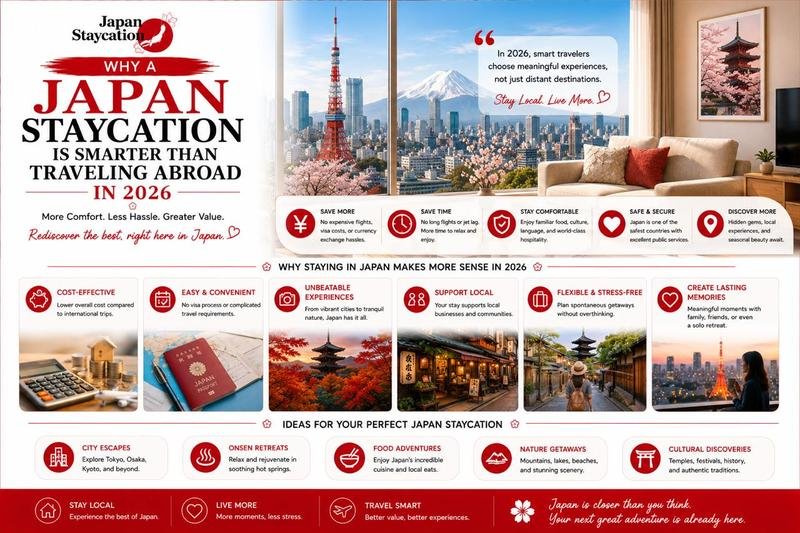
Why are millions of travelers choosing a staycation in Japan over international trips? In 2026, Japan has become the ultimate staycation destination — and not just because of weaker yen or cheaper domestic flights. From hidden onsen villages nobody talks about to futuristic capsule hotels in Tokyo, Japan offers experiences that rival any foreign destination. This guide explains exactly why staying in Japan for your next vacation is the smartest travel decision you can make.
What Is a Japan Staycation?
A Japan staycation means exploring Japan as a tourist without leaving the country. It is not just about saving money. It is about discovering the Japan most international tourists never see — rural villages, secret beaches, local festivals, and neighborhood izakayas where nobody speaks English. For foreigners living in Japan, a staycation is the fastest way to fall in love with the country all over again.
10 Reasons Why Japan Staycation Beats International Travel
1. The Yen Is at Historic Lows
In 2026, the Japanese yen remains weak against the US dollar, euro, and British pound. What does this mean for you? Luxury ryokan that cost $400/night in Kyoto now cost half that. A week-long staycation in Hokkaido costs less than a weekend in London or Paris. International tourists are flooding Japan precisely because their money goes further here. As a foreign resident, you get the same advantage without the jet lag.
2. No Jet Lag, No Long-Haul Flights
International travel means 10+ hours in economy class, timezone confusion, and 3 days of recovery. A Japan staycation? Hop on the Shinkansen and you are in Kyoto in 2 hours, Osaka in 2.5 hours, or Sendai in 1.5 hours. You arrive refreshed, save on airfare, and get an extra weekend of actual vacation instead of airport limbo.
3. Japan Has 47 Prefectures — Most Foreigners See Only 5
The average foreign tourist visits Tokyo, Kyoto, Osaka, maybe Hiroshima, and Mount Fuji. That is 5 out of 47 prefectures. A staycation in Japan lets you explore:
- Nagano: Snow monkeys, onsen towns, and the Japanese Alps
- Kagoshima: Active volcanoes, black sand beaches, and samurai history
- Tottori: Massive sand dunes and the least-visited prefecture — no crowds
- Aomori: Lake Towada, Hirosaki Castle, and the best apple pie in Japan
- Okinawa: Coral reefs, turquoise water, and a culture closer to Hawaii than Tokyo
4. Domestic Flights Are Shockingly Cheap
Peach Aviation, Jetstar Japan, and Skymark Airlines offer domestic flights from Tokyo to Sapporo, Okinawa, or Kagoshima for as little as ¥5,000–¥15,000 one-way. Compare that to a ¥80,000+ flight to Seoul or Bangkok. With budget carriers expanding routes in 2026, flying within Japan is cheaper than taking the train for long distances.
5. Japan Rail Pass for Residents Is Back
In 2026, Japan introduced discounted JR regional passes for foreign residents — something previously limited to tourists. The Hokkaido Rail Pass, Kyushu Rail Pass, and Tohoku Rail Pass now offer 5-day unlimited travel for around ¥20,000. This opens up entire regions that were previously expensive to reach.
6. Rural Japan Is Desperate for Tourists
Japan’s population decline has hit rural areas hardest. Small towns now offer free accommodation, farm-stay experiences, and guided cultural tours at prices that would be impossible in Tokyo. Villages like Shirakawa-go, Gujo-Hachiman, and Yakushima actively welcome staycation travelers with English support, local food experiences, and untouched nature.
7. Food Tourism Within Japan Is Endless
Japan is not just sushi and ramen. Every prefecture has its own signature cuisine:
- Fukuoka: Tonkotsu ramen birthplace — eat at the original yatai stalls
- Hiroshima: Okonomiyaki so good locals line up for 2 hours
- Ishikawa: Kaiseki cuisine that predates Kyoto’s tourist restaurants
- Kagoshima: Kurobuta pork and shochu distilleries open for tasting
- Hokkaido: Soup curry, Jingisukan lamb, and dairy farms with fresh ice cream
A Japan staycation is essentially a food tour where every region is a different country.
8. Seasonal Events You Cannot Find Anywhere Else
Japan’s four seasons create unique experiences every month:
| Season | Best Staycation Destinations | What to Experience |
|---|---|---|
| Spring (Mar–May) | Tokyo, Kyoto, Nara | Cherry blossoms, hanami parties, strawberry picking |
| Summer (Jun–Aug) | Okinawa, Hokkaido, Nagano | Beach resorts, lavender fields, fireworks festivals |
| Autumn (Sep–Nov) | Kyoto, Nikko, Tohoku | Koyo (fall foliage), harvest festivals, hot springs |
| Winter (Dec–Feb) | Hokkaido, Nagano, Tohoku | Ski resorts, snow monkeys, illuminations |
9. Safety and Convenience Are Unmatched
Japan is consistently ranked one of the safest countries in the world. You can leave your phone on a cafe table and it will be there when you return. ATMs work 24/7. Convenience stores sell everything from concert tickets to underwear. Train schedules are accurate to the second. When you staycation in Japan, you spend zero energy worrying about safety or logistics — and 100% energy enjoying your trip.
10. You Support Local Communities Directly
Rural Japan faces depopulation and economic decline. When you stay at a family-run minshuku in Tottori or buy handmade soba from a 3rd-generation shop in Nagano, your money goes directly to the community. International tourism overwhelmingly benefits Tokyo and Kyoto. A domestic staycation spreads wealth to the regions that need it most.
Japan Staycation vs International Travel: Cost Comparison
| Expense | Japan Staycation (7 Days) | International Trip (7 Days) |
|---|---|---|
| Transport | ¥15,000–¥30,000 (Shinkansen/domestic flight) | ¥80,000–¥200,000 (international flight) |
| Accommodation | ¥35,000–¥70,000 (ryokan/guesthouse) | ¥50,000–¥100,000 (hotel abroad) |
| Food | ¥21,000–¥35,000 (local dining) | ¥28,000–¥50,000 (tourist restaurants) |
| Activities | ¥10,000–¥20,000 (temples, onsen, tours) | ¥15,000–¥30,000 (museums, tours) |
| Visa/Insurance | ¥0 (no visa needed) | ¥3,000–¥10,000 |
| Total Estimate | ¥81,000–¥155,000 | ¥176,000–¥390,000 |
Staycation in Japan costs roughly 50–60% less than an equivalent international trip — and you avoid jet lag.
Best Japan Staycation Destinations for 2026
For Nature Lovers
- Yakushima: UNESCO World Heritage island with ancient cedar forests and wild deer
- Ogasawara Islands: The Galapagos of Japan — 25-hour ferry from Tokyo
- Kamikochi: Alpine valley in Nagano with crystal-clear rivers and hiking trails
For Foodies
- Osaka: Street food capital of Japan — takoyaki, okonomiyaki, and kushikatsu
- Hokkaido: Dairy, seafood, and soup curry paradise
- Kanazawa: Gold leaf ice cream and the best sushi outside Tokyo
For Culture Seekers
- Kyoto: 2,000+ temples, geisha districts, and traditional ryokan
- Nara: Todai-ji Temple and bowing deer in a UNESCO park
- Takayama: Edo-period preserved town with morning markets
For Relaxation
- Beppu: Japan’s onsen capital with 8 different hot spring types
- Kusatsu: Famous for yubatake (hot water field) and open-air baths
- Hakone: Onsen with Mount Fuji views and art museums
How to Plan Your Japan Staycation
- Choose a Region: Pick one region and explore it deeply instead of rushing across Japan
- Use Local Tourism Sites: Prefecture tourism boards (like Visit Kyushu or Discover Tohoku) offer discount coupons
- Book Direct: Contact ryokan and minshuku directly via their websites — often 10–20% cheaper than booking platforms
- Get a Regional Rail Pass: JR regional passes for residents are the best value for multi-city trips
- Eat Local: Skip chain restaurants. Look for teishoku (set meal) restaurants where locals eat
FAQ
Is Japan expensive for a staycation?
Not necessarily. Rural Japan is significantly cheaper than Tokyo. A staycation in Tottori or Aomori costs 30–50% less than equivalent experiences in Kyoto or Osaka. Budget ryokan start at ¥6,000/night, and local food is often half the price of tourist districts.
Can I do a Japan staycation if I do not speak Japanese?
Yes. Major tourist destinations have English support. For rural areas, download Google Translate offline and learn basic phrases. Many ryokan owners use translation apps and are patient with foreigners.
What is the best season for a Japan staycation?
Every season is ideal for different reasons. Spring for cherry blossoms, summer for beaches and festivals, autumn for foliage, and winter for skiing and onsen. Avoid Golden Week (late April–early May) and Obon (mid-August) when domestic travel peaks.
Do I need a car for a rural Japan staycation?
Sometimes. Major cities and tourist towns have excellent train connections. But remote areas like Yakushima, Tottori sand dunes, or Shiretoko Peninsula require rental cars. Japan accepts international driving permits for most foreign residents.
How is a staycation different from normal domestic travel?
A staycation mindset means treating your own country with the curiosity of a tourist. It is about slow travel, local immersion, and discovering places you would normally overlook. Instead of ticking off famous sights, you explore neighborhoods, talk to locals, and eat where they eat.
Conclusion
A Japan staycation in 2026 is not just a budget-friendly alternative to international travel — it is a superior travel experience. You avoid jet lag, save money, discover hidden regions, eat better food, and support local communities. With the yen weak, domestic flights cheap, and regional rail passes now available to residents, there has never been a better time to explore Japan like a tourist in your own backyard.
Whether you are a foreign resident looking to reconnect with Japan or an international visitor maximizing your time in the country, a staycation offers depth, authenticity, and value that no international trip can match.
Ready to start planning? Browse our complete Tokyo Staycation Guide for neighborhood recommendations, rental tips, and hidden gems across the city.