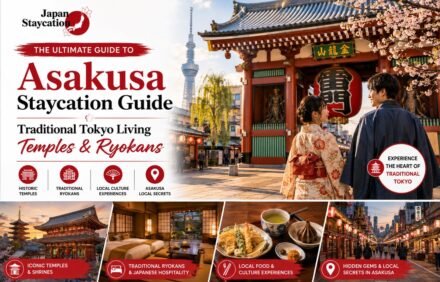
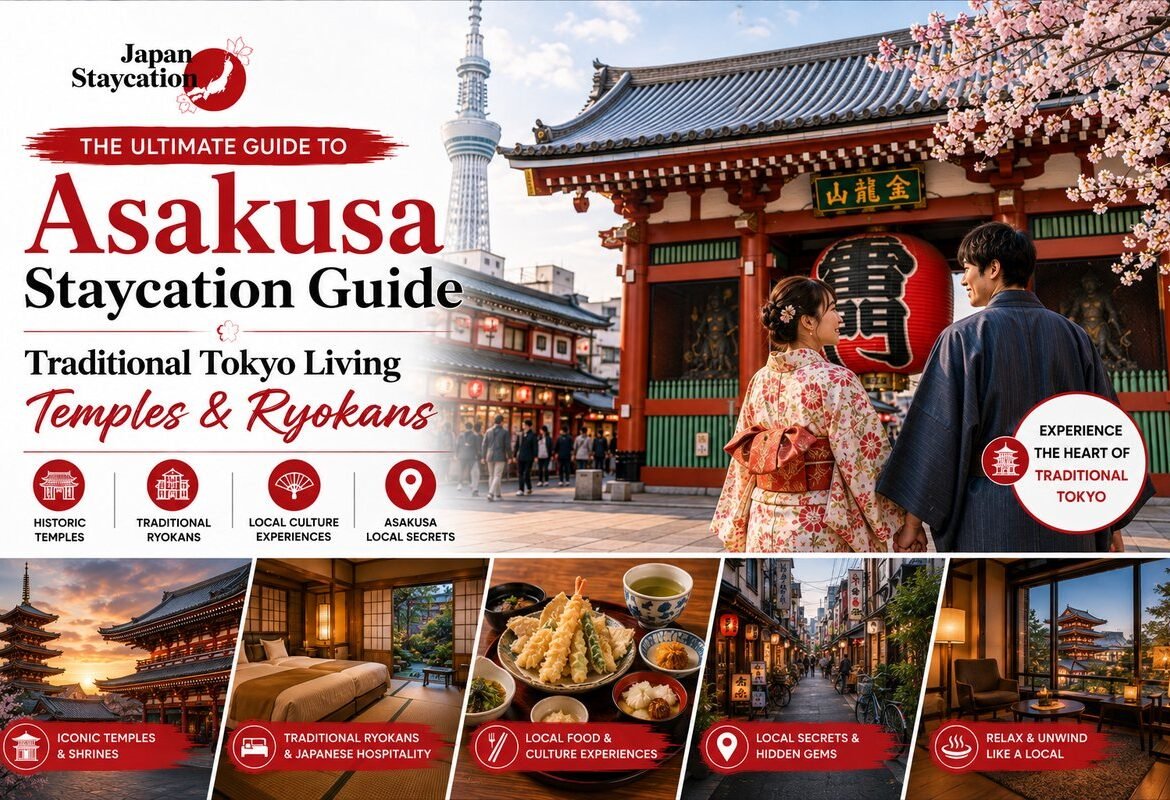
Asakusa Staycation: Traditional Tokyo Living, Temples & Ryokans Guide
Imagine waking up to the gentle sound of temple bells, stepping outside your accommodation into streets lined with traditional wooden buildings, and spending your day exploring centuries-old temples before returning to a cozy ryokan for a hot spring bath. This is not a scene from ancient Japan — this is an Asakusa staycation, one of Tokyo’s most enchanting neighborhood experiences.
Located in the northeastern part of central Tokyo, Asakusa (浅草) is a district where the past and present coexist in perfect harmony. Unlike the ultra-modern districts of Shibuya or Shinjuku, Asakusa preserves the atmosphere of old Tokyo (Edo), offering visitors an authentic glimpse into traditional Japanese culture. For travelers seeking a meaningful staycation, Asakusa provides an unparalleled combination of cultural immersion, culinary delights, and serene accommodations.
Senso-ji Temple: Tokyo’s Oldest Spiritual Landmark
At the heart of Asakusa lies Senso-ji Temple (浅草寺), Tokyo’s oldest temple founded in 645 AD. As the centerpiece of any asakusa staycation, this magnificent Buddhist temple complex attracts millions of visitors annually, yet retains a sense of spiritual tranquility that dedicated travelers can experience during early morning or late evening visits.
The temple’s iconic Kaminarimon (Thunder Gate) serves as the dramatic entrance, featuring a massive red lantern that has become one of Tokyo’s most photographed landmarks. Beyond the gate stretches Nakamise-dori, but the temple itself holds far more than its famous facade.
Key Temple Areas to Explore:
- Hondo (Main Hall): The central worship hall where visitors can offer prayers and purchase omamori (protective charms)
- Five-Story Pagoda: A stunning 53-meter tall pagoda that dominates the skyline and offers incredible photo opportunities
- Asakusa Shrine: Located adjacent to Senso-ji, this Shinto shrine hosts the famous Sanja Matsuri festival each May
- Garden Walks: Peaceful pathways surrounding the temple where you can escape the crowds
For the best asakusa staycation experience, visit Senso-ji between 6:00 AM and 8:00 AM. The morning light creates magical atmosphere, and you’ll avoid the tourist buses that arrive by 9:30 AM. Many locals believe that early morning prayers carry special significance, and the temple monks begin their day with chanting that echoes through the precincts.
Nakamise Shopping Street: From Souvenirs to Street Food
Stretching 250 meters from Kaminarimon to Senso-ji’s main hall, Nakamise Street (仲見世通り) is one of Japan’s oldest shopping streets, with origins dating back to the 17th century. During your asakusa staycation, this pedestrian thoroughfare becomes your gateway to traditional Japanese crafts, snacks, and cultural experiences.
Must-Try Street Foods on Nakamise:
| Food Item | Description | Approx. Price |
|---|---|---|
| Ningyo-yaki | Small doll-shaped cakes filled with sweet red bean paste | ¥150-200 |
| Kibi-dango | Millet dumplings on skewers, a traditional Asakusa specialty | ¥200-300 |
| Age-manju | Deep-fried buns with various fillings like matcha and custard | ¥180-250 |
| Senbei | Rice crackers grilled fresh over charcoal | ¥100-500 |
| Matcha Soft Serve | Premium green tea ice cream | ¥400-500 |
Beyond food, Nakamise offers exceptional shopping for traditional crafts. Look for hand-painted folding fans (sensu), kimono accessories, chopsticks, and tenugui (traditional Japanese hand towels). Many shops have operated for generations, and the artisans take visible pride in their work.
Insider Tip: The side streets branching off Nakamise (called “Shin-Nakamise”) offer less crowded shopping with equally authentic merchandise. Prices here are often 10-20% lower than the main street.
Ryokan vs Apartment: Where to Stay in Asakusa
One of the most important decisions for your asakusa staycation is choosing the right accommodation. Asakusa offers two distinct experiences: traditional ryokan inns and modern vacation apartments. Each provides a completely different window into Japanese life.
Ryokan Experience:
A ryokan is a traditional Japanese inn featuring tatami-matted rooms, futon bedding on the floor, communal or private onsen (hot spring baths), and kaiseki (multi-course traditional dinner). Staying in a ryokan transforms your asakusa staycation into a cultural immersion.
- Authentic Atmosphere: Wear yukata robes, sleep on futons, and experience Japanese hospitality (omotenashi)
- Included Meals: Most ryokans serve elaborate breakfast and dinner featuring seasonal ingredients
- Onsen Access: Many ryokans in Asakusa feature sento-style bath facilities
- Higher Price Point: Expect ¥15,000-35,000 per night for quality ryokans
Vacation Apartment:
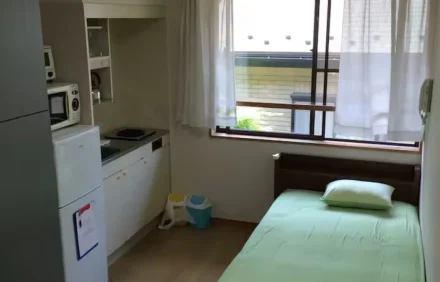
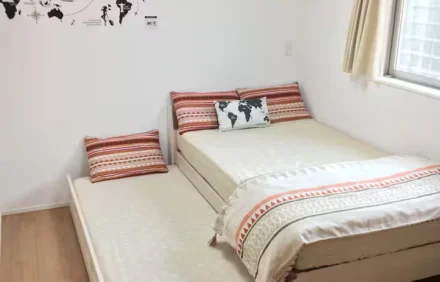
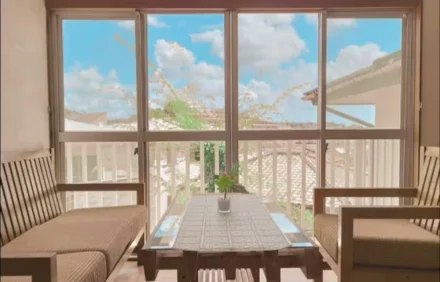
Modern apartments in Asakusa offer flexibility, privacy, and the chance to live like a local. These range from compact studio units to spacious multi-bedroom homes.
- Local Living: Shop at neighborhood grocery stores, cook your own meals, set your own schedule
- Better Value: Apartments typically cost ¥8,000-20,000 per night depending on size and location
- Extended Stays: Ideal for asakusa staycation plans of one week or longer
- Modern Amenities: WiFi, washing machines, kitchenettes, and Western-style beds
Accommodation Comparison:
| Feature | Ryokan | Apartment |
|---|---|---|
| Price/Night | ¥15,000-35,000 | ¥8,000-20,000 |
| Cultural Experience | Maximum immersion | Moderate (living like a local) |
| Privacy | Limited (shared baths) | Full privacy |
| Meals Included | Yes (breakfast & dinner) | Self-catering |
| Best For | 2-3 night cultural experience | Extended staycation (5+ nights) |
Exploring Traditional Neighborhoods
While Senso-ji draws the crowds, the surrounding neighborhoods offer equally rewarding exploration. The streets west of the temple, particularly around Dembo-in and Matsugaya, contain well-preserved traditional homes and shops that most tourists never discover.
Kappabashi Street (合羽橋道具街), just northwest of Senso-ji, is Tokyo’s “Kitchen Town” where restaurant supply shops sell everything from professional-grade knives to plastic food models. Even if you’re not buying, the window shopping is fascinating — giant chef heads mark the street entrances.
The Sumida River promenade offers peaceful evening walks with views of Tokyo Skytree. During cherry blossom season (late March to early April), this riverside path becomes one of Tokyo’s most beautiful hanami (flower viewing) spots.
Best Food Spots in Asakusa
Beyond Nakamise street food, Asakusa boasts an incredible dining scene that spans traditional Japanese cuisine to modern fusion. Here are the must-visit establishments for your asakusa staycation:
- Daikokuya Tempura: Operating since 1887, this legendary restaurant serves tendon (tempura rice bowls) with their secret sauce recipe. Expect a 30-60 minute wait — it is absolutely worth it.
- Sometaro Okonomiyaki: A traditional restaurant where you cook your own savory pancakes at tableside grills. Perfect for groups and families.
- Kamiya Bar: Tokyo’s oldest Western-style bar, established in 1880. Famous for Denki Bran, an electric brandy cocktail unique to this establishment.
- Asakusa Imahan: Premium sukiyaki and shabu-shabu using top-grade wagyu beef. Reserve ahead for dinner.
- Misojyu: Specializes in miso soup with customizable ingredients. A surprisingly satisfying and affordable meal.
- Kagari Ramen: Known for their tori-paitan (chicken broth) ramen with truffle oil. A modern counterpoint to Asakusa’s traditional dining scene.
Nearby Attractions Worth Visiting
An asakusa staycation serves as an excellent base for exploring eastern Tokyo. These nearby attractions are easily accessible on foot or by short train rides:
- Tokyo Skytree (15-minute walk): The world’s tallest tower at 634 meters. The observation decks offer panoramic views stretching to Mount Fuji on clear days.
- Ueno Park (10 minutes by train): Tokyo’s most famous park featuring museums, zoo, and stunning cherry blossoms.
- Akihabara Electric Town (8 minutes by train): The global center of anime, manga, and electronics culture.
- Sumida Aquarium (15-minute walk): Modern aquarium beneath Tokyo Skytree featuring impressive jellyfish displays.
- Edo-Tokyo Museum (12 minutes by train): Comprehensive museum covering Tokyo’s history from the Edo period to present day.
Frequently Asked Questions
What is the best time of year for an Asakusa staycation?
Spring (late March to early April) and autumn (October to November) offer the most pleasant weather for exploring Asakusa on foot. Cherry blossom season along the Sumida River is spectacular, while autumn brings comfortable temperatures and fewer crowds than spring. Winter (December to February) provides a serene atmosphere with New Year festivities, though temperatures can drop to near freezing. Summer (June to August) is hot and humid but features vibrant festivals including the famous Sanja Matsuri in May.
How many days should I spend in Asakusa for a proper staycation?
A minimum of 2-3 nights is recommended to fully experience Asakusa without rushing. This allows one full day for Senso-ji and Nakamise, one day for neighborhood exploration and food tours, plus time to simply absorb the atmosphere. For a comprehensive asakusa staycation combining cultural experiences with day trips to nearby districts, plan for 4-5 nights.
Is Asakusa family-friendly for a staycation?
Absolutely! Asakusa is one of Tokyo’s most family-friendly districts. Children love the street food on Nakamise, traditional craft workshops (like making ningyo-yaki or painting fans), and the open spaces around Senso-ji. The pedestrian-friendly streets are safe for young travelers, and many restaurants accommodate families. Vacation apartments are particularly recommended for families, offering space for children to play and kitchen facilities for preparing meals.
Can I rent a kimono during my Asakusa staycation?
Yes, kimono rental is one of the most popular activities in Asakusa. Numerous rental shops line the streets near Senso-ji, offering everything from simple yukata (summer kimono) to elaborate furisode (formal long-sleeve kimono). Prices range from ¥3,000 for basic yukata rental to ¥10,000+ for premium kimono with professional hair styling. Most shops include dressing assistance, and wearing a kimono while exploring the temple grounds creates unforgettable photo opportunities.
How do I get to Asakusa from Narita or Haneda Airport?
From Narita Airport, the Keisei Access Express offers direct service to Asakusa Station in approximately 60 minutes for ¥1,300. From Haneda Airport, take the Keikyu Line to Shinagawa, then transfer to the Asakusa Line for Asakusa Station — total journey time is approximately 45 minutes and costs around ¥600. Both airports also offer limousine bus services to major hotels in the Asakusa area. Tokyo Metro’s Ginza Line also connects Asakusa directly to Shibuya and other central districts.
Ready to experience traditional Tokyo? An Asakusa staycation offers an unforgettable blend of history, culture, and modern comfort that you will not find anywhere else in the capital. Book your accommodation today and discover why this neighborhood remains Tokyo’s most beloved destination for authentic Japanese experiences.